Living Alone With Early-Stage Dementia: A Complete Safety, Independence, and Support Guide
Published on July 3, 2026

You Can Still Live on Your Own
A diagnosis of early-stage Alzheimer’s or another dementia does not mean you have to leave your home tomorrow. Many people live on their own, and live well, for a good while after that first hard conversation in the doctor’s office. Independence does not end at diagnosis. It simply starts to need a plan.
This guide is written for two people at once: you, if you are the one living with the diagnosis and you want to stay in your own home for as long as it is safe, and the family member or friend who loves you and wants to help without taking the wheel entirely. The early stage is the right time to read it, because it is the stage where you can still make your own choices, set up your own systems, and tell everyone what you want. Work through it alongside your doctor and, if you can, a geriatric care manager or social worker who can shape the details to your life.
Start With an Honest Look at What Is Still Safe
Independence is not all-or-nothing. Most daily tasks fall into one of three buckets: still safe on your own, safe with a backup in place, and no longer safe to do alone. Sorting them honestly, now, is the whole game.
A few tasks deserve special attention:
- Driving. Everyone who has Alzheimer’s will eventually reach a point where driving is no longer safe. Planning your alternatives before that day arrives (rides from friends, a car service, senior transportation through your Area Agency on Aging) keeps a hard change from becoming a crisis.
- Cooking. The stove is the single biggest hazard in the kitchen. If you have left a burner on, lean on appliances that shut themselves off and on meals that need no cooking.
- Money. Early dementia can make you more vulnerable to money mistakes and to scams that target older adults.
- Medications. Skipped or doubled doses are one of the most common early dangers of living alone.
Here is the honest part. If friends or family have raised concerns about something you are doing, listen to what they see. Alzheimer’s gradually chips away at your own insight into what you can safely do, so the people around you often notice a problem before you do. An occupational therapist can do a formal in-home safety assessment, and only a neurologist or geriatrician can speak to your stage and what it means. This guide cannot diagnose you. It can only help you plan.
Set Up Your Money and Errands to Run Themselves
The less that depends on you remembering, the longer you stay independent. Automate everything you can while you are the one deciding how.
Arrange direct deposit for your Social Security, pension, or any regular income, so no check goes unhandled. Put your predictable bills on automatic payment, or give a trusted person the legal authority to manage money on your behalf. This is also the moment to finish your legal and financial planning while you can fully take part: a durable power of attorney, an advance directive, and a clear plan for how care will be paid for. These are decisions to make with an elder law attorney or a certified financial planner, not alone at the kitchen table, because the rules around long-term care funding and Medicaid are genuinely complicated.
For everyday needs, set up grocery delivery, a pharmacy that delivers, and services such as Meals on Wheels or a homemaker service for cleaning and errands. Your local Alzheimer’s Association chapter and its Community Resource Finder can point you to what exists in your town.
Build a Technology Stack That Buys You Independence
The right devices can quietly cover the gaps memory leaves, and many are simple to set up in the early stage.
- Automatic medication dispensers hold your pills, release only the right dose at the right time, and can alert a family member if a dose is missed.
- Smart-home sensors and alerts can flag an open door at 3 a.m., a stove left on, or a morning where the kitchen never got used, and send that signal to someone who can check on you.
- A medical alert system with fall detection puts a 24-hour response center one button away.
- Location devices, worn as a watch or pendant or carried as a GPS-enabled wallet card, mean that a moment of disorientation away from home can end quickly instead of frighteningly.
- A simple video-calling device keeps familiar faces close, which grows more comforting than the phone over time.
Two honest cautions from the people who study these tools. No location system is 100 percent accurate, several do not work well indoors, and none of them replaces a real human being checking on you. Before you buy, make sure the network the device relies on actually works where you live and where you tend to go.

Make Your Home Fall-Proof and Wander-Safe
Dementia changes balance, depth perception, and how your eyes handle contrast and dim light, which together raise your risk of a fall. Clear the clutter and loose rugs from your walkways, add grab bars where you steady yourself, and light every path brightly and evenly, with night lights for the route to the bathroom.
The kitchen deserves its own pass. Choose appliances with an automatic shut-off, fit stove-knob covers or remove the knobs when the stove is not in use, disconnect the garbage disposal, and clear away anything toxic that could be mistaken for food. Keep a list of emergency numbers where you can find it, and make sure your smoke and carbon monoxide detectors work, with fresh batteries twice a year.
Wandering deserves real attention too. Six in ten people living with dementia will become lost or disoriented at least once, and it can happen even in the early stage on a familiar street. A steady daily routine with activity and exercise lowers the restlessness that often leads to it. As the disease moves along, you and your family may add door sensors or locks placed high or low, out of the usual line of sight.
Carry Identification and Prepare for Disorientation
Plan for the moment you might not recognize where you are, so it stays a small event rather than a dangerous one. Wear a medical ID bracelet that says you have dementia and lists an emergency contact, and consider enrolling in a local safe-return or wandering-response program.
Keep simple cards in your wallet, purse, or car that you can hand to a cashier, a server, or clinic staff. They explain in one line that you have dementia and ask for patience, which takes the pressure off a public moment that might otherwise rattle you. The Alzheimer’s Association offers printable versions. Program an in-case-of-emergency contact into your phone as well.

Set Up Daily Human Contact
Isolation and loneliness are among the quieter risks of living alone with dementia, and they wear on both your mood and your memory. Build human contact into the calendar so it does not depend on anyone remembering to reach out.
A standing daily check-in, a phone call at the same hour from a friend or a paid service, means someone always knows you are all right. Adult day programs give you a structured day out with company, a meal, and activities, and they give any family caregiver a genuine break. Keeping up meaningful activity that gives your days shape and pleasure steadies your mood and eases the restlessness behind wandering.
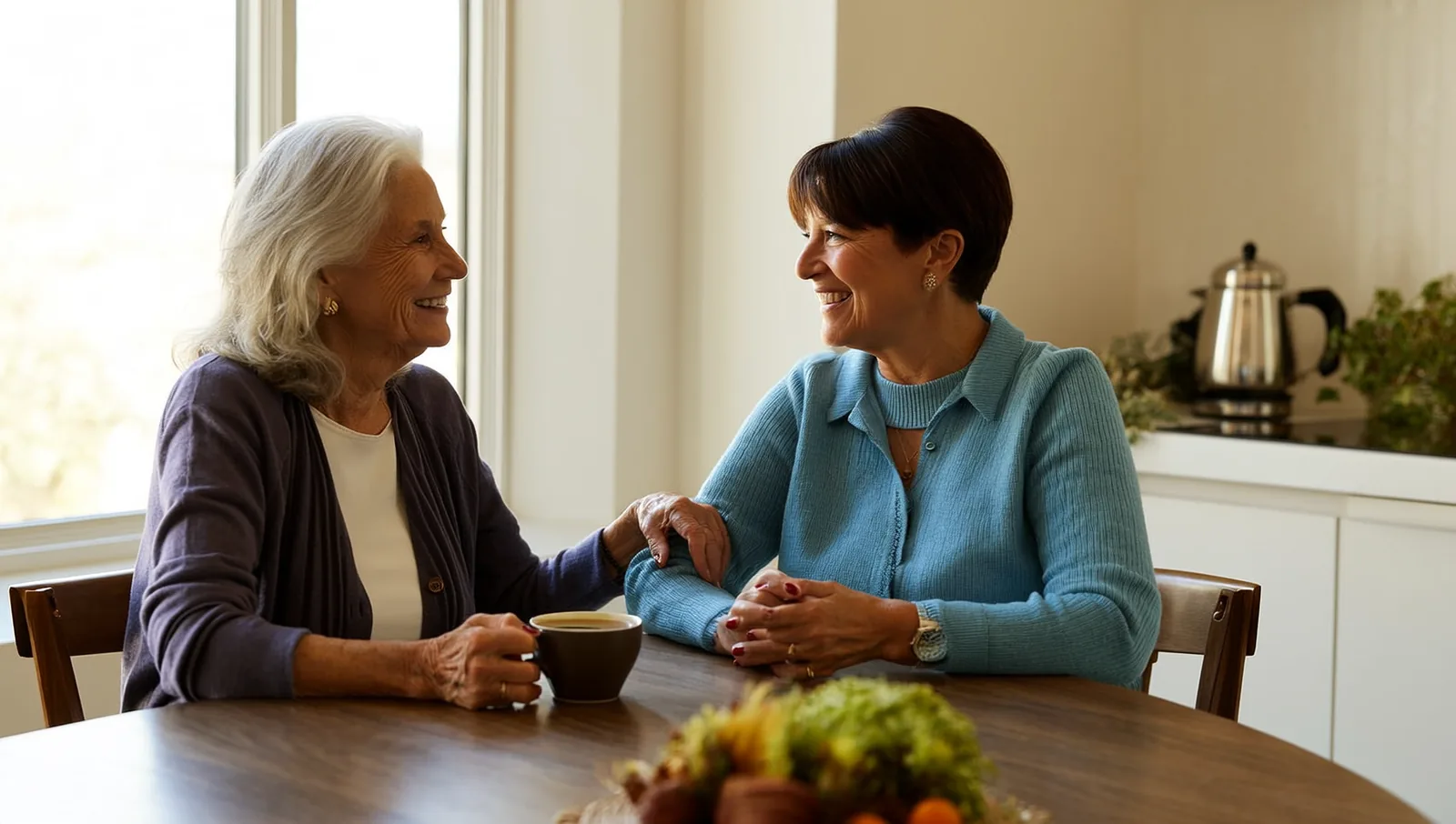
Loop In the People Who Love You
Independence does not mean going it alone. Give a trusted person a signed release so your doctor is legally free to talk with them, and tell that person where your key documents, medication list, and emergency contacts live. If the people closest to you live far away, distance does not have to mean absence. The coordination simply looks different from their end, and much of it can be done from anywhere with a phone and a plan.
Know the Honest Signals That Solo Living Is No Longer Safe
This is the hardest section to read, and the most important. Living alone is safe until it is not, and the shift is usually gradual. Watch, together with your family, for signals like these:
- Scorched pots, or the stove or oven left on more than once.
- Getting lost in a place that used to be familiar.
- Missed or doubled medications even with a dispenser in place.
- Falls, or a fear of falling that keeps you from moving.
- Weight loss, an empty refrigerator, or spoiled food left uneaten.
- Money mistakes, unpaid bills piling up, or nearly falling for a scam.
- Wandering, or a frightening spell of not knowing where you are.
Noticing these is not failure. It is information, and it means it is time to add support rather than wait for a crisis. That might mean bringing paid help into your home first. When home is no longer safe even with help, a dedicated memory care community may be the next step. Assisted living, memory care, and skilled nursing are different levels of care, and a good geriatric care manager or social worker can help you tell which one fits and decide without deciding alone.
The Goal Is More Good Time at Home
Every system in this guide exists for one reason: to give you more good time in your own home, on your own terms, safely. Set it up early, while you are the one making the calls, and lean on the people and professionals who want to help. You do not have to figure any of it out by yourself. The Alzheimer’s Association 24/7 Helpline (800.272.3900) is staffed day and night, and a geriatric care manager or social worker can help you build the plan that lets you stay independent for as long as it is safe to be.
Sources
- Alzheimer’s Association on living successfully on your own in the early stage
- Alzheimer’s Association for adapting the home to prevent injuries
Further reading
- Long-Distance Caregiving for a Parent With Dementia: A Complete Coordination Guide
- In-Home Memory Care: When to Consider It and How to Get Started
- Meaningful Activities and Engagement for People Living With Dementia: The Complete Family Guide
- Choosing the Right Memory Care Facility: Key Questions to Ask
- National Institute on Aging on tips for living alone with early-stage dementia
- National Institute on Aging for home safety when someone lives alone