Driving and Dementia: When and How to Take the Keys Away
Published on July 18, 2026
The Conversation Nobody Wants to Start
You have already noticed something. A new scrape along the passenger door that nobody can explain. A twenty minute errand that took an hour and a half. The way your mother went quiet at the intersection, waiting for something, and you could not tell what. You know what you saw. What you do not know is what you are supposed to do about it, or whether you have the right to do anything at all.
You do. And this is one of the few caregiving decisions where waiting has a real cost, because the risk is not confined to the person you love. It is the family in the crosswalk too.
Here is the fact that anchors everything else: driving demands fast reaction to constantly shifting conditions, so a person living with Alzheimer’s will, at some point, be unable to drive safely. Not might. Will. The only open question is when, and whether the change arrives as a plan you made or as a phone call you receive.
Why Driving Fails Before It Looks Like It Is Failing
Families are often reassured by the wrong evidence. He has driven that route for forty years. She has never had a ticket in her life. The trouble is that decades of practice protect the automatic parts of driving, staying in the lane, working the pedals, reading a green light, long after dementia has eroded the parts that actually keep you alive on the road.
What goes first is the executive layer. Judging the speed of an oncoming car. Deciding in half a second whether to brake or steer. Holding a plan in mind while traffic rearranges itself around you. Visuospatial processing goes too, which is why hitting curbs and drifting between lanes shows up early. Reaction time slows. And the disease quietly damages insight, so the driver is frequently the last person in the family to know.
The specific pattern depends on which type of dementia is involved. Lewy body dementia can bring fluctuating alertness and visual hallucinations that make driving dangerous unusually early. Frontotemporal dementia often strikes judgment and impulse control while memory still seems fine, which produces a driver who tests well and drives recklessly. This is why a clean memory screen is not clearance to drive, and why only a physician can speak to your loved one’s stage and what it means.
The Warning Signs That Mean Act Now
Determining when someone can no longer drive safely takes deliberate observation, not a single bad day. Ride along as a passenger a few times and watch specifically for these:
- Forgetting how to find familiar places, or getting lost on a routine route
- Failing to observe traffic signs and signals
- Making slow or poor decisions in traffic, especially at intersections
- Driving too fast or too slowly for conditions
- Becoming angry, agitated, or confused behind the wheel
- Hitting curbs, or drifting out of the lane
- Confusing the brake and the gas pedal
- Coming home much later than usual from a familiar trip
- Forgetting mid-drive where the trip was headed

Treat some of these differently from others. Confusing the pedals, getting lost in a familiar place, running signals, and any near miss or collision are not items to monitor for a few more weeks. They mean driving stops now, today, while you sort out the rest.
If you live far away and cannot ride along, ask the people who see the car daily. A neighbor, a hairdresser, the person at the pharmacy counter. New dents nobody mentions are their own kind of answer, and gathering this kind of ground truth from a distance is one of the core skills of coordinating a parent’s care from another state.
Let Someone Objective Make the Call
The single best move available to you is to stop being the judge. Rather than arguing about what you saw, get a comprehensive driving evaluation from an occupational therapy driving rehabilitation specialist.
This is not a DMV road test. A certified driver rehabilitation specialist, usually an occupational therapist credentialed through the Association for Driver Rehabilitation Specialists, assesses vision, cognition, reaction time, and functional ability, then puts your loved one on the actual road under structured conditions. The outcome is not simply yes or no. In earlier stages it often comes back as a set of limits worth having: daytime only, no highways, familiar routes within a few miles of home, no passengers. The American Occupational Therapy Association maintains a national database of these specialists.
Two things make this worth the out of pocket cost, since insurance coverage is inconsistent. It produces an objective finding instead of a family opinion. And it hands your loved one a verdict from a professional, which is far easier to accept than a verdict from a daughter.
Having the Conversation
Start before it is urgent, ideally while your loved one can still take part in the decision. In the early stage you can ask them to sign a driving contract, a written agreement giving a named person permission to help them stop driving when the time comes. It converts a future ambush into a promise they made themselves.
When you do raise it, lead with the concern and follow immediately with alternatives, so the conversation is about how they will get places rather than what they are losing. Appeal to their sense of responsibility, which often survives longer than insight does. Acknowledge that this is a genuine loss and say so out loud. And expect this to be the first of several conversations, not the last.
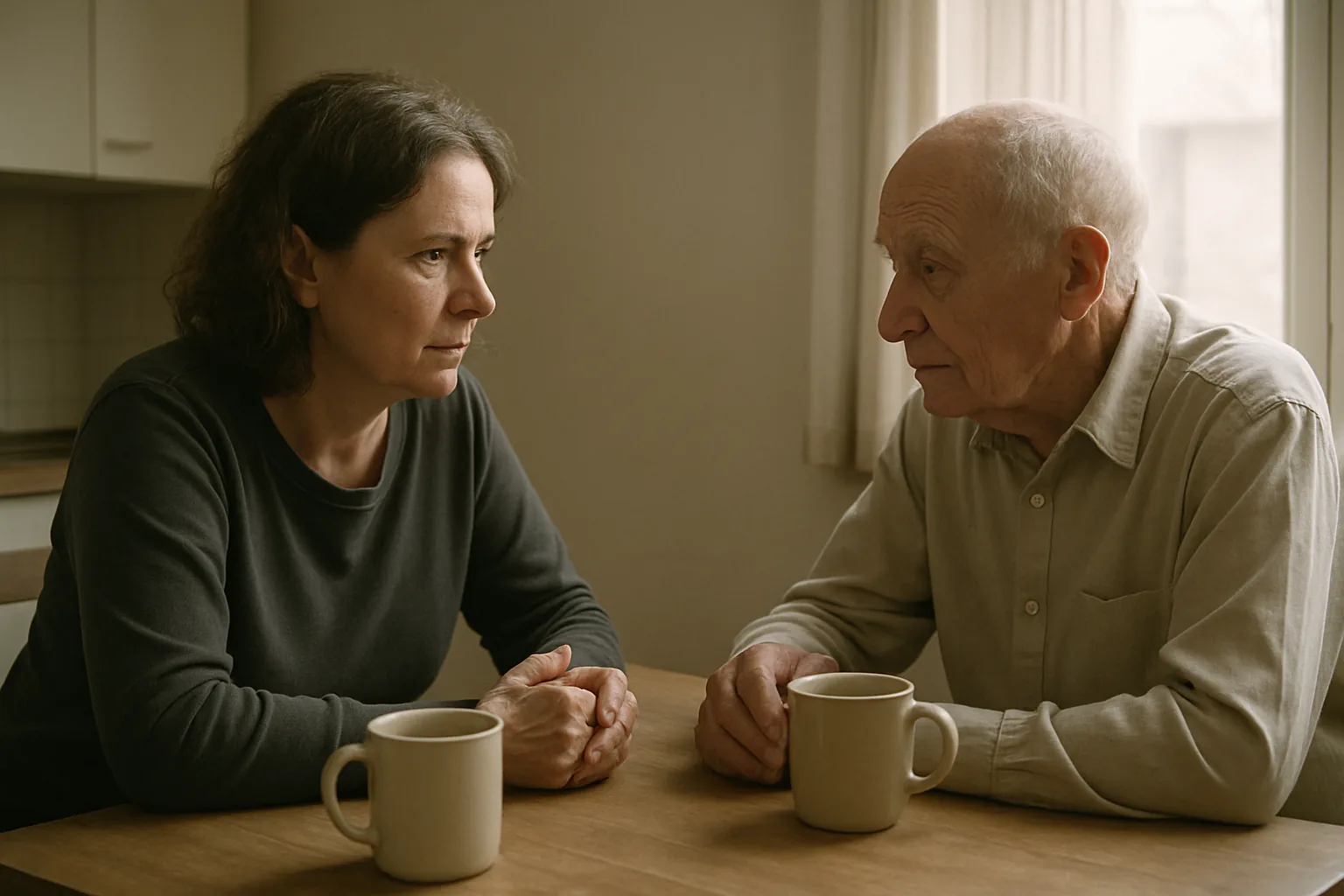
Ask the physician to carry the message. A doctor advising your loved one directly, ideally in a family conference, lands differently than a family member pleading. Ask for it in writing, a letter or even a prescription pad note stating that this person must not drive. That page becomes something you can produce calmly the next time the subject resurfaces, and it will resurface. The broader toolkit for these moments, staying calm, avoiding argument, redirecting rather than correcting, is covered in the guide to communicating with a loved one who has dementia.
When They Refuse
Some people hand over the keys with relief. Others fight, and the fighting is not stubbornness. Dementia impairs the very insight required to understand the problem, and it alters mood and personality so reactions run hotter. Anger here is a symptom. Do not take it as a verdict on you.
Escalate in order. First bring in a respected outside voice: a physician, an attorney, a clergy member, the sibling who has always been listened to. Then, as a last resort, act on the car itself. Families disable the vehicle, have a mechanic quietly declare it unrepairable, park it at another house, or sell it. Hiding keys works less well than people expect and can generate hours of frantic searching. Removing the car removes the question.
Whatever you do, arrange safe and reliable transportation first. Taking the keys without replacing them is what turns a safety decision into a betrayal.
Replace the Car, Not Just the Keys
Driving is not really about driving. It is about being the person who can go where they want. Protect that, and much of the resistance eases.
Build a written schedule so trips remain predictable rather than requests: a standing ride to church, a set grocery morning, a regular lunch out. Divide the driving among family and friends so no one person becomes the gatekeeper. Set up a taxi or rideshare account, or ask about volunteer driver programs through faith communities and senior centers. Every county has an Area Agency on Aging with older adult transportation, and the Alzheimer’s Association Community Resource Finder and the Eldercare Locator will surface what exists near you. Cut the number of trips needed by moving prescriptions, groceries, and meals to delivery. If your loved one served in the military, ask specifically about the Veterans Transportation Service, one of the benefits veteran families routinely miss.
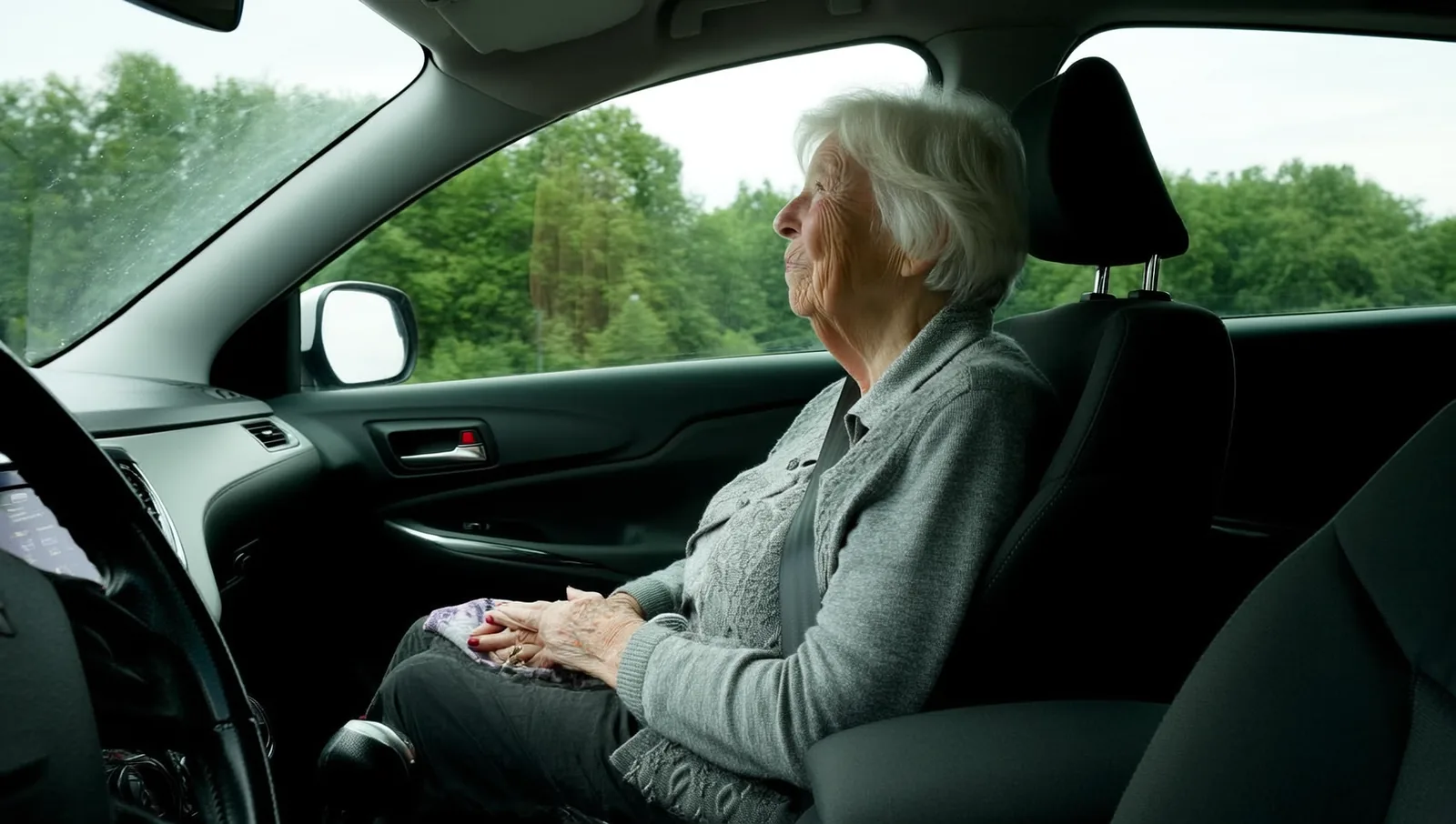
Watch for what fills the gap, too. Losing the car often shrinks a person’s world faster than the disease does, and isolation feeds low mood and restlessness. Building in regular activity and time with other people matters as much as the rides do.
When to Bring in the DMV
If your loved one keeps driving despite everything, the licensing authority is a legitimate route, and it takes you out of the role of the person who took the keys.
State law varies more than families expect. A 2024 study in JAMA Network Open found that only four states, California, Delaware, Oregon, and Pennsylvania, require clinicians to report a dementia diagnosis to the DMV. Fourteen states require the driver to self report. In the remaining 32 states and Washington, DC, there is no mandate, but physicians, family members, and police can usually submit a request for re-examination, sometimes confidentially. Look up your own state’s rules before you assume anything; the categories shift, and secondhand summaries disagree.
A report typically triggers a medical review, and often a written test, a vision test, and a road test. California, for example, permits continued driving only for drivers in the mild stages and takes moderate or severe dementia off the road entirely.
One honest caveat. That same JAMA study found clinicians in mandatory reporting states were substantially more likely to underdiagnose dementia, roughly 12.4 percent versus 7.7 percent in states without mandates, apparently because doctors hesitate to trigger the consequence. It is a reminder that your family’s physician may need encouragement to document what they are seeing.
What You Are Actually Protecting
Taking the keys feels like taking something away, and it is. But the alternative is not your loved one keeping their independence. The alternative is a crash that ends their independence and possibly someone else’s life, on a day nobody chose.
Do it early, do it with a professional evaluation in hand, and do it with the rides already arranged. Driving is often the first big loss in a long sequence, and how you handle it sets the tone for everything after, including how long safe independence at home can last. A geriatric care manager or social worker can help you plan the transition, and the Alzheimer’s Association 24/7 Helpline (800.272.3900) is staffed at any hour, including the ones when you are lying awake deciding whether today is the day.
Sources
- Alzheimer’s Association on having the driving conversation and the signs that it is time
- JAMA Network Open for how state DMV reporting mandates affect dementia diagnosis
- ADED with what the certified driver rehabilitation specialist credential covers
- American Occupational Therapy Association covering driving evaluation and rehabilitation programs
- California DMV detailing how a dementia diagnosis is handled at re-examination
Further reading
- Living Alone With Early-Stage Dementia: A Complete Safety, Independence, and Support Guide
- Communicating With a Loved One Who Has Dementia: A Complete Caregiver’s Guide
- Types of Dementia: A Family’s Complete Guide to Telling Them Apart
- Long-Distance Caregiving for a Parent With Dementia: A Complete Coordination Guide