Designing a Comfortable Room for Memory Care: Key Considerations
Published on February 1, 2025

Why Room Design Matters in Dementia Care
For a person living with dementia, the physical environment is far more than a backdrop. It is an active participant in their daily experience. Cognitive decline affects how people perceive space, interpret visual information, and move through their surroundings. A poorly designed room can trigger confusion, anxiety, and agitation, while a thoughtfully arranged space can promote calm, support independence, and even reduce the frequency of challenging behaviors. Whether families are preparing a room in a memory care community or adapting a bedroom at home, understanding the principles of dementia-friendly design can make a meaningful difference in a loved one’s comfort and quality of life.
Lighting: The Most Underestimated Element
Lighting is arguably the single most impactful design factor in dementia care, yet it is frequently overlooked. Aging eyes require significantly more light to see clearly. By age 75, most people need roughly twice the illumination of a typical younger adult, and dementia can amplify this need further. Insufficient or uneven lighting creates shadows that a person with impaired depth perception may interpret as holes, obstacles, or threats, increasing anxiety and fall risk.
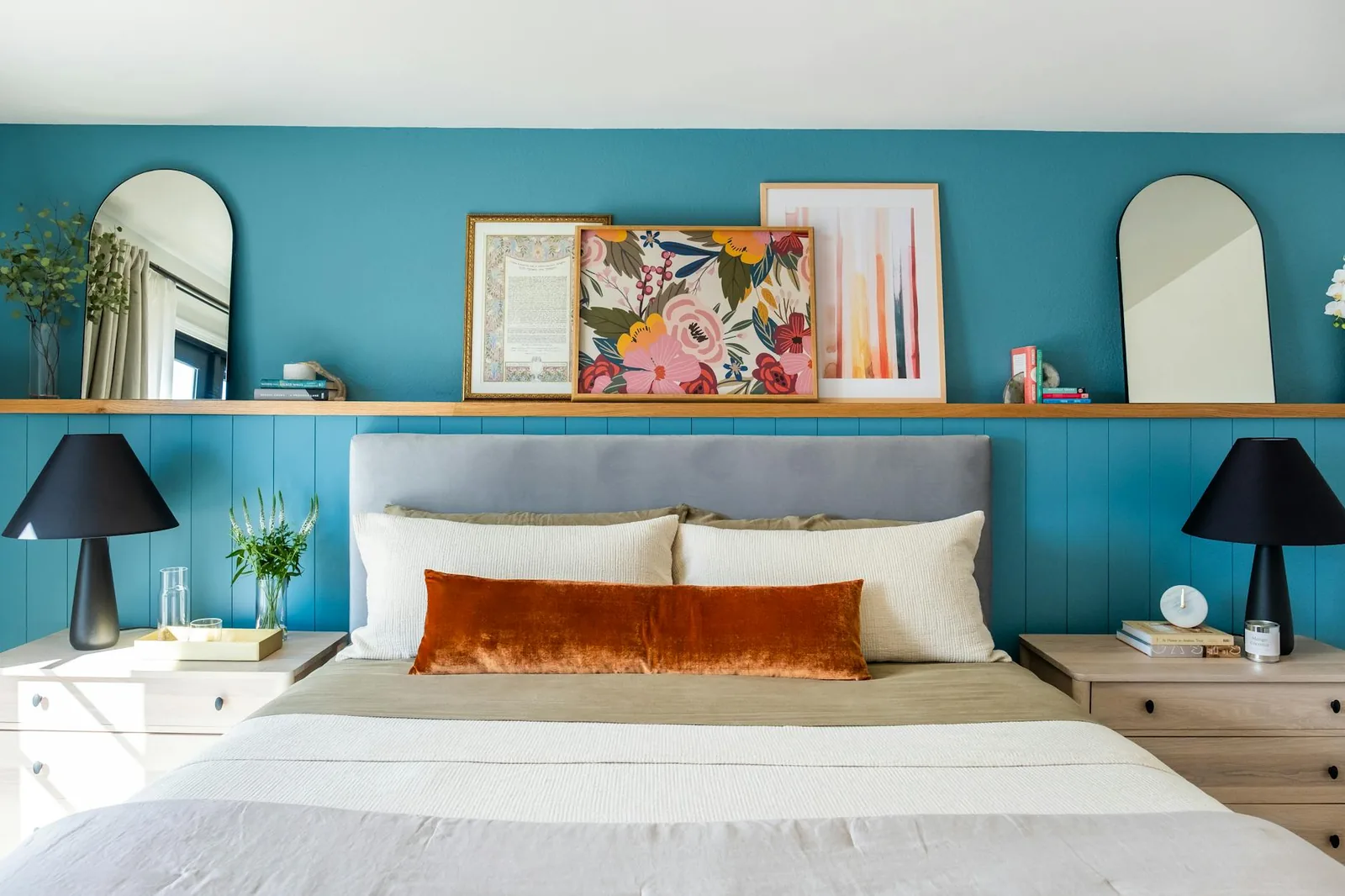
The goal is bright, even, glare-free illumination throughout the room during daytime hours. Natural daylight should be maximized by keeping curtains open during the day and windows clean. When artificial lighting is needed, diffused sources such as frosted bulbs, lampshades, and wall-mounted fixtures work better than harsh overhead fluorescents. Avoid shiny surfaces on floors, countertops, and furniture, as they produce glare that can be disorienting.
Lighting should also support the body’s circadian rhythm. Cool, bright light during morning and midday hours promotes alertness and engagement, while warm amber or orange tones in the evening signal the body to prepare for sleep. This transition is particularly important for the roughly one in five people with Alzheimer’s who experience sundowning (a pattern of increased confusion and agitation in the late afternoon and evening). Motion-sensor nightlights in warm tones along the path between the bed and bathroom help with safe nighttime movement without disrupting sleep cycles.
Color, Contrast, and Visual Clarity
Color plays a functional role in dementia-friendly design that extends well beyond aesthetics. People with cognitive decline progressively lose the ability to distinguish between objects and surfaces that are similar in tone. Creating strong contrast between key elements (the bed against the floor, the toilet seat against the bowl, a plate against the placemat) helps a person identify what they need and where it is.
Calming hues work best for primary wall colors. Blue and green tones promote relaxation and are associated with reduced anxiety, making them well suited for bedrooms and quiet spaces. Red and bright yellow can draw attention to specific objects or areas, which is useful for signage and wayfinding but overstimulating as dominant room colors. Avoid busy patterns on bedding, upholstery, curtains, and flooring. Bold geometric or floral prints can appear to move or shift to someone with impaired visual processing, creating confusion or distress. Solid colors in contrasting tones are the safest and most supportive choice throughout the room.
Floor color changes deserve special attention. A sudden transition from light carpet to dark tile, or vice versa, can be perceived as a step, a hole, or a wet surface. Consistent, matte-finish flooring in a single neutral tone across the room and into adjoining spaces minimizes this risk.
Furniture and Layout
The arrangement of furniture in a memory care room should prioritize clear sightlines, open walking paths, and intuitive wayfinding. Clutter is a significant source of confusion; every unnecessary object adds to the cognitive demands of the space. Keep surfaces clean and limit displayed items to those that serve a clear functional or emotional purpose.
The bed should be accessible from both sides and positioned so the person can see the bathroom or toilet area from a lying position. This direct visual connection has been shown to reduce nighttime incontinence and disorientation. Bed linens should contrast with the floor color so the sleeping area is clearly defined. Adjustable-height beds improve safety for getting in and out, and rounded or padded edges on bed frames and tables reduce injury risk from accidental contact.
Chairs should be sturdy, comfortable, and easy to get into and out of. Armrests provide support for sitting and standing. Upholstery colors should contrast with the floor so the chair is easy to identify. Traditional, recognizable furniture styles tend to be more comforting than modern or unfamiliar designs, as they connect with long-term visual memory.
Wardrobes and drawers benefit from partial transparency or clear labeling. Open-fronted drawers or cabinets with glass panels allow a person to see contents without having to remember what is inside. Laying out a single day’s clothing in an accessible, visible location simplifies the dressing routine.
Personalization and Memory Cues
Personal items are not just decorative. They serve as anchors to identity and sources of emotional reassurance. Photographs from earlier life, a favorite blanket, a cherished piece of jewelry displayed on a bedside table, or a familiar perfume can trigger positive long-term memories and help a person feel connected to who they are. Because short-term memory is typically more impaired than long-term recall, displaying photos from childhood or early adulthood is often more effective than recent pictures.
Memory boxes placed outside the door of a memory care room serve a dual purpose. They help the resident identify their own room by associating it with meaningful personal objects, and they give staff and visitors conversation starters rooted in the person’s history and interests. Inside the room, a small display of meaningful mementos creates a sense of ownership and belonging that can ease the emotional difficulty of living in an unfamiliar setting.
Managing Sound and Sensory Input
Noise is an often-underappreciated source of stress for people with dementia. Background noise, echoing surfaces, and competing sounds from televisions or hallway activity can create a disorienting sensory environment that increases agitation. Soft furnishings such as carpeting, curtains, and upholstered furniture absorb sound and reduce reverberation. If hard flooring is necessary, area rugs with non-slip backing can help dampen noise while remaining safe.
Complete silence, however, can also be unsettling. A gentle background of familiar music at low volume (a favorite radio station or a curated playlist of songs from the person’s younger years) provides comforting auditory stimulation without overwhelming. Music memory tends to persist longer than other forms of recall in Alzheimer’s disease, making it a uniquely effective tool for mood regulation and emotional connection.
Safety Without Sacrificing Comfort
Safety modifications should be woven into the design as seamlessly as possible. Removing or covering mirrors can prevent the distress that occurs when a person with dementia does not recognize their own reflection. Securing or locking away cleaning products, sharp objects, and medications protects against accidental harm. Removing internal door locks prevents a person from accidentally locking themselves in a room.
The overarching goal is a space that feels like home rather than a clinical setting. When safety features are integrated thoughtfully (rounded furniture edges instead of corner guards, sensor-activated lighting instead of institutional hallway strips, familiar-looking lever faucets instead of complex controls), they protect without signaling that something is wrong. A well-designed memory care room communicates comfort, dignity, and respect, reinforcing the person’s sense of self even as their cognitive world narrows.
Feature photo by Irem Yilmazturk on Pexels.
Further reading (sources)
- Dementia Services Development Centre on light reflectance values and why flooring contrast matters
- Peer-reviewed research for making homes more dementia-friendly through aids and adaptations
- Alzheimer’s Society with the perception changes a room has to account for