Dance Movement Therapy for Dementia: What a 204-Person Trial Found That Exercise Alone Did Not
Published on October 12, 2026
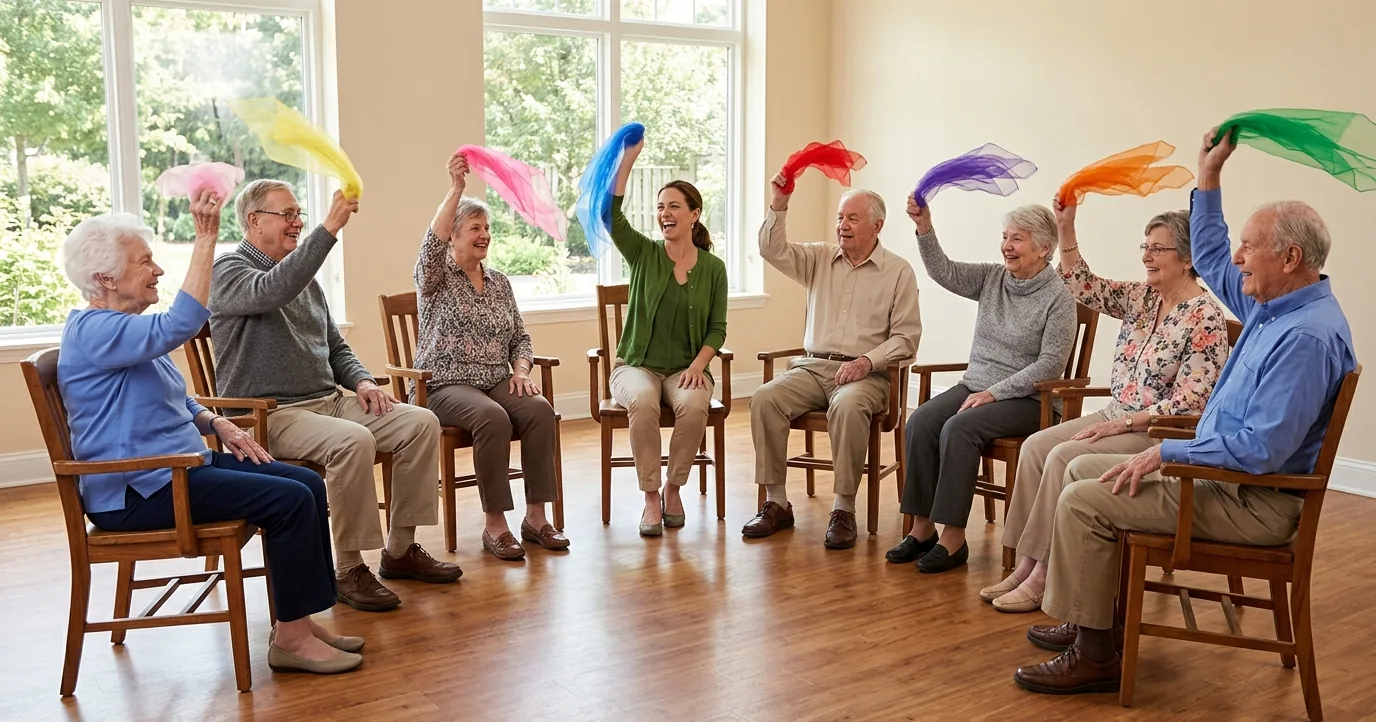
Your father’s adult day program sends home a calendar every month. Tuesdays and Thursdays say “Chair Exercise.” Wednesdays say “Music and Movement.” He comes home from one humming and from the other just tired, and you have started to wonder whether the difference is real or whether it is all a way to fill the afternoon.
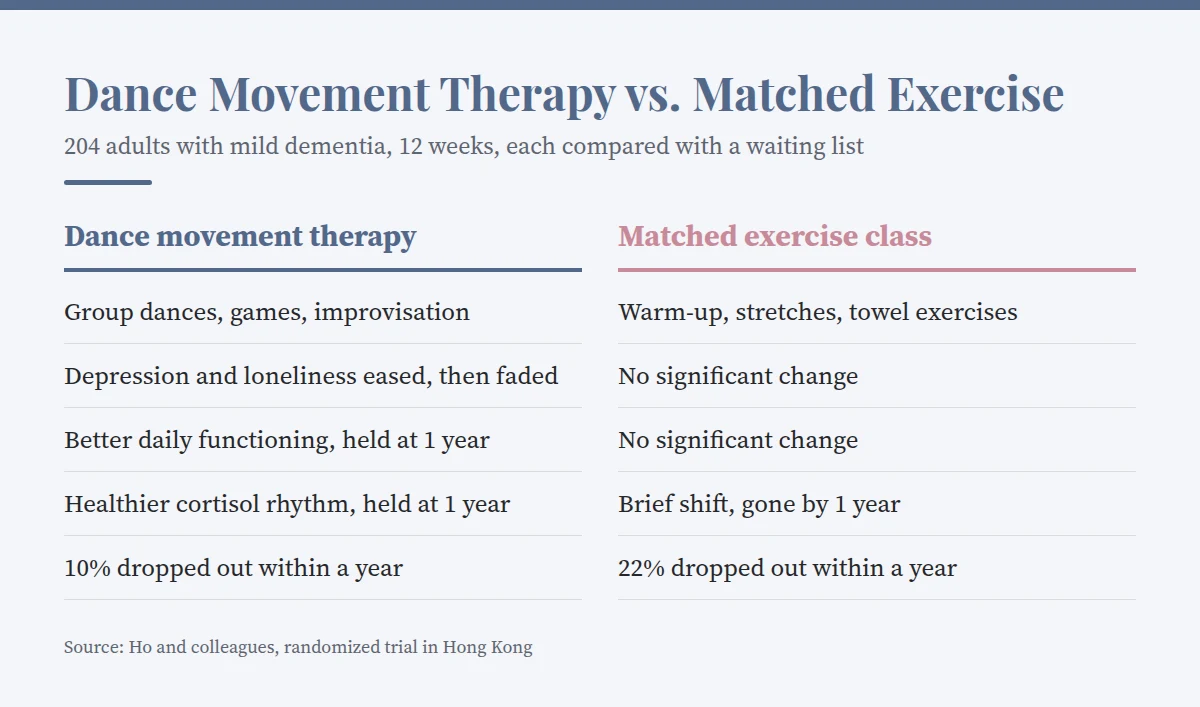
It is a fair question, and for a long time the research had little to say about it. Then a team at the University of Hong Kong put it to a proper test. They randomly assigned 204 older adults with very mild to mild dementia to dance movement therapy, to an exercise class matched for intensity, or to a waiting list. After twelve weeks the dance group was less depressed and less lonely, managed daily tasks better, and showed a healthier daily rhythm in the stress hormone cortisol. The exercise group, moving just as hard for just as long, showed no lasting change on any of those measures.
That result deserves attention, and it also deserves a careful reading, because it is one trial and it did not show everything a headline would like it to. This guide covers what a dance movement therapy session actually involves, what the trial found and did not find, where it sits in the wider research, and how to find the real thing or borrow its best ingredients at home.
What Dance Movement Therapy Is (and What It Is Not)
The American Dance Therapy Association defines dance/movement therapy as “the psychotherapeutic use of movement to promote emotional, social, cognitive, and physical integration of the individual,” with the aim of improving health and well-being. The word doing the work in that sentence is psychotherapeutic. A dance class teaches steps and notices when you miss one. A chair exercise class counts repetitions. In dance movement therapy, the therapist watches how a person moves (a hand tapping a knee, a slow sway, shoulders that tighten when the room gets loud) and treats it as communication: mirroring it back, building on it, inviting the rest of the group in. There is no wrong step, because the movement is the message.
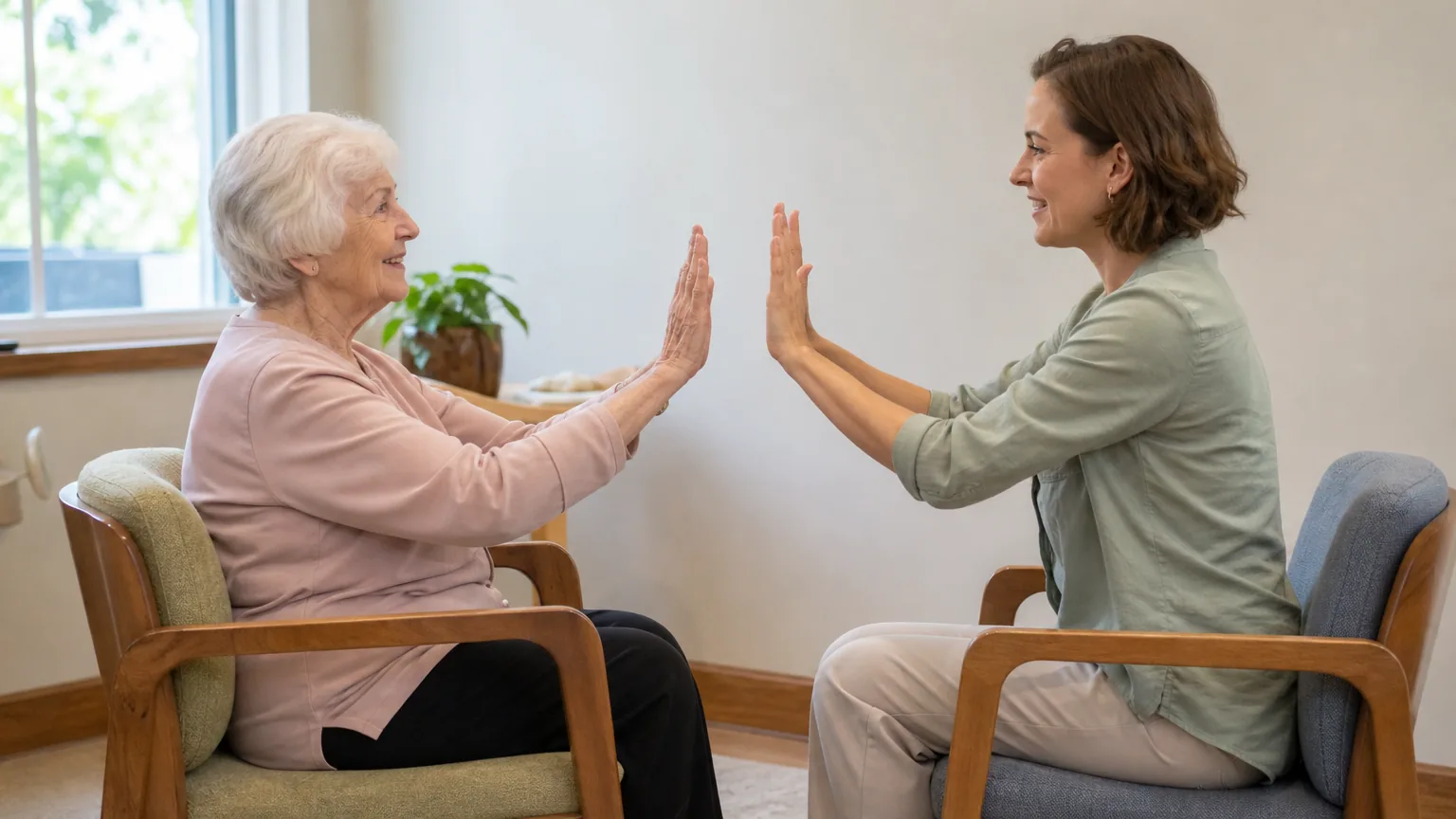
That matters in dementia, where words are often among the first things to slip. In laying out their trial, the Hong Kong researchers pointed out that motor learning is relatively well preserved in dementia and that “a non-verbal approach provides a psychotherapeutic medium of expression” for people who are losing language. Movement becomes a way to say something without having to find the word for it, the same idea behind the nonverbal communication skills that keep families connected as conversation gets harder. They also noted that group dance “supports a sense of integration and connection,” steadying people who are losing their bearings in time and place.
It is also a clinical profession, not a label for any class with music in it. In the United States, dance/movement therapists train at the master’s level. Graduates of an approved program, or of an alternate training route, become Registered Dance/Movement Therapists (R-DMT) once accepted by the Dance/Movement Therapy Certification Board, and the advanced credential, Board Certified Dance/Movement Therapist (BC-DMT), comes later with additional requirements and experience. They work in nursing homes, day care centers, medical facilities and private practice, among other settings.
Inside the Hong Kong Trial
The study enrolled 204 people with an average age of 79, more than eight in ten of them women, recruited from a hospital’s psychogeriatric clinics and from community centers for older adults in Hong Kong. All lived in the community and had very mild or mild dementia on the Clinical Dementia Rating scale. About two-thirds were at the very mildest level, the stage where the line between mild cognitive impairment and early dementia starts to blur.
Both active groups met for an hour, twice a week, for twelve weeks: 24 hours in all. Researchers measured everyone at the start, at the end of the program, and again at six and twelve months.
The dance movement therapy sessions were led by a registered dance movement therapist or a therapist in training, with groups of about ten to twelve. Each session mixed four elements: simple group dances, movement games, improvised movement, and movement interactions between members. Steps were simplified, with an emphasis on rhythm and on movements that coordinate the two sides of the body, and everything could be done standing or seated. Scarves, elastic bands, ribbons and small musical instruments came out often. Each session closed the same way: every participant was invited to offer a word or two, a gesture or a movement to express how they felt, and the group talked it over.
The exercise sessions were led by trained fitness instructors and followed a fixed plan: 15 minutes of warm-up, 15 minutes of stretching and joint movements, 15 minutes of exercises using towels, and a 15-minute cool-down. Heart rates were monitored in both groups so that each worked at the same mild to moderate intensity.
In other words, the amount of movement was matched. What differed was everything wrapped around it: music and rhythm, play, choice, self-expression and contact with other people.
What the Trial Found
Compared with the waiting list, the dance movement therapy group finished the twelve weeks with:
- Less depression, loneliness and negative mood, all measured on standard questionnaires.
- Better daily functioning on a scale of instrumental activities of daily living. These are the more complex tasks of independent life, such as using the telephone, shopping, preparing meals, taking medications and handling money.
- A healthier cortisol rhythm. Cortisol, a stress hormone, normally peaks shortly after waking and falls through the day. A flatter curve, one that falls less across the day, has been linked to poorer mental and physical health in a review of 80 studies, with the strongest link to immune and inflammation outcomes. The dance group’s daily curve became steeper, closer to the healthy pattern.
The effects were modest. Researchers express them in standardized units in which 0.2 counts as small and 0.5 as medium, and these fell between 0.30 and 0.42. Read that as a real but moderate shift in a group’s average: more good afternoons, not a different disease.
Some of it lasted. A year after the study began, nine months after the last session, the gains in daily functioning and in the cortisol rhythm were still there. The mood gains were not. Depression, loneliness and negative mood drifted back once the sessions ended, and by the one-year mark the dance group no longer differed significantly from the waiting list on them. The researchers read that as a sign that, like exercise, the benefit depends on keeping at it.
The exercise group, by contrast, showed no significant improvement in mood, loneliness, daily functioning or thinking compared with the waiting list. Its cortisol curve did shift by the end of the program, but that change had faded by the one-year mark.
One more number tells its own story. Over the year, 10 percent of the dance group dropped out, against 22 percent of the exercise group and 24 percent of the waiting list. The researchers suggested the difference may reflect how much more people enjoyed it. That matters more than it sounds, because the program a person wants to go back to is the only one that can help them.
What the Trial Did Not Show
This is where coverage of studies like this tends to overreach, so it is worth being plain.
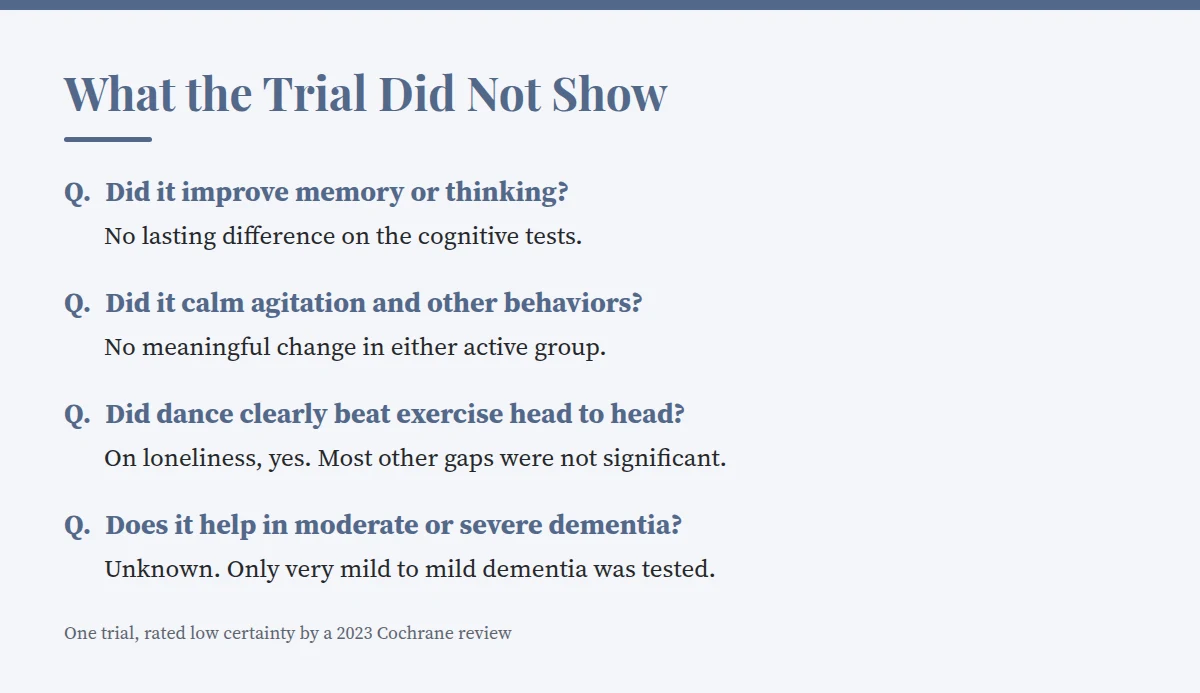
It did not show better memory or thinking. Taken together, the cognitive tests did not separate the groups, and the Cochrane review that later reanalyzed the trial found no significant differences in thinking. A small edge in memory recall appeared at six months and was gone by twelve.
It did not show fewer behavioral symptoms. Agitation, irritability and the other behavioral and psychological symptoms of dementia, as rated by caregivers, did not change meaningfully in either active group.
It did not show that dance clearly beats exercise. The cleanest result is dance against doing nothing. When the researchers compared the two active programs directly, most differences leaned toward dance but were not statistically significant. The exceptions were loneliness and one working memory test (repeating strings of digits backward), and daily functioning fell just short. An independent Cochrane review that reanalyzed the data also saw a slight advantage for dance over exercise on depression, and rated that evidence low certainty.
It did not show that exercise is a waste of time. The exercise program here was gentle. Warm-up and cool-down took up half of every hour, leaving little room for real aerobic work, and more than three-quarters of participants said they already exercised regularly, a figure the authors themselves called unusually high. A Cochrane review of exercise programs for people with dementia found promising, if very low-quality, evidence that exercise helps people keep up with daily activities. And a 2026 analysis that pooled more than 170 randomized trials of exercise in mild cognitive impairment and dementia found that dance held its own against aerobic exercise, strength training, yoga and other options, ranking near the top on some measures of thinking, but did not significantly outperform any of them. Its conclusion is the one to hold onto: exercise brings broad benefits for people with cognitive impairment. Keep the walks.
It did not test moderate or severe dementia. Everyone in the trial lived in the community with very mild or mild dementia, in a single city, and most were women. Whether the same program helps someone further along, or someone living in a memory care unit, is unknown. The 2023 Cochrane review searched the research through December 2022 and found this was the only randomized trial of dance movement therapy for dementia that met its standards. Partly because some participants had mild neurocognitive disorder rather than a dementia diagnosis, the reviewers rated the evidence low certainty and warned that the true effects “may be substantially different from those found.”
Why Dance Might Help Where a Workout Did Not
Nobody has proven why, but the design of the trial points to some likely reasons.
Company, not just activity. Loneliness showed the clearest advantage for dance over exercise head to head, and the sessions were built around other people: mirroring a partner, moving as a group, sharing at the end. In a typical exercise class, everyone faces the instructor.
A way to speak without words. For someone whose sentences are slipping away, a gesture that gets mirrored back is proof of being understood. The closing ritual of a word, a gesture or a movement gave every participant that moment, every session.
Rhythm and music. The researchers put rhythm at the center of every session, citing earlier work suggesting that rhythmic activity can lift mood and help memory in older people with dementia. The National Institute on Aging lists singing or dancing to well-known songs among the activities that can be adapted for people with Alzheimer’s.
No way to fail. Improvisation has no wrong answers. That removes a source of embarrassment that can make people with dementia pull back from group activities, and it may help explain why so few people dropped out.
How to Find Dance Movement Therapy or Ask for It
Credentials are the first filter. A Registered or Board Certified Dance/Movement Therapist (R-DMT or BC-DMT) has the kind of training the Hong Kong sessions relied on, and the American Dance Therapy Association’s website includes a Find a DMT search.
Many memory care communities and adult day programs run “music and movement” or chair dance sessions led by activity staff. Those can be genuinely good, but they are not the same thing. Before you assume the Wednesday class is dance movement therapy, ask:
- Who leads it, and what is their training? A credentialed dance/movement therapist, a recreation therapist and an aide with a playlist are three different offerings.
- How often does it run? The trial met twice a week, and its mood benefits faded when the sessions stopped.
- How big is the group? The trial used groups of about ten to twelve.
- Can residents take part seated? Every movement in the trial could be done from a chair.
- Is there room for improvisation and sharing, or does everyone copy the leader?
- Does staff note changes in mood or participation, and pass them on to families?
Better still, ask to watch a session. It is the same test we suggest for any community’s claim to person-centered care: look for residents choosing how they move, staff responding to what residents offer, and nobody being corrected. If programs like this are part of a placement decision, a geriatric care manager or social worker who knows the local communities can tell you which ones actually deliver.
Borrowing the Ingredients at Home
A living room is not a therapy session, and nothing here replaces a trained therapist. But the structure of the Hong Kong program is simple enough to borrow, and it fits alongside the other meaningful activities that make up a good day.
- Check with the doctor first, especially if your loved one has heart trouble, dizzy spells or a history of falls. Use a sturdy chair without wheels, and clear the floor of rugs and clutter.
- Choose the music together. Songs from a person’s teens and twenties tend to land best.
- Start seated. Roll the shoulders, tap the knees to the beat, sway from side to side.
- Bring out a prop. A light scarf to wave, pass back and forth or toss gives the hands something to do and the eyes something to follow.
- Mirror, do not teach. Copy their movement and let them copy yours. There are no wrong steps, so never correct one.
- Close with a check-in. Ask for one word, or one gesture, for how it felt.
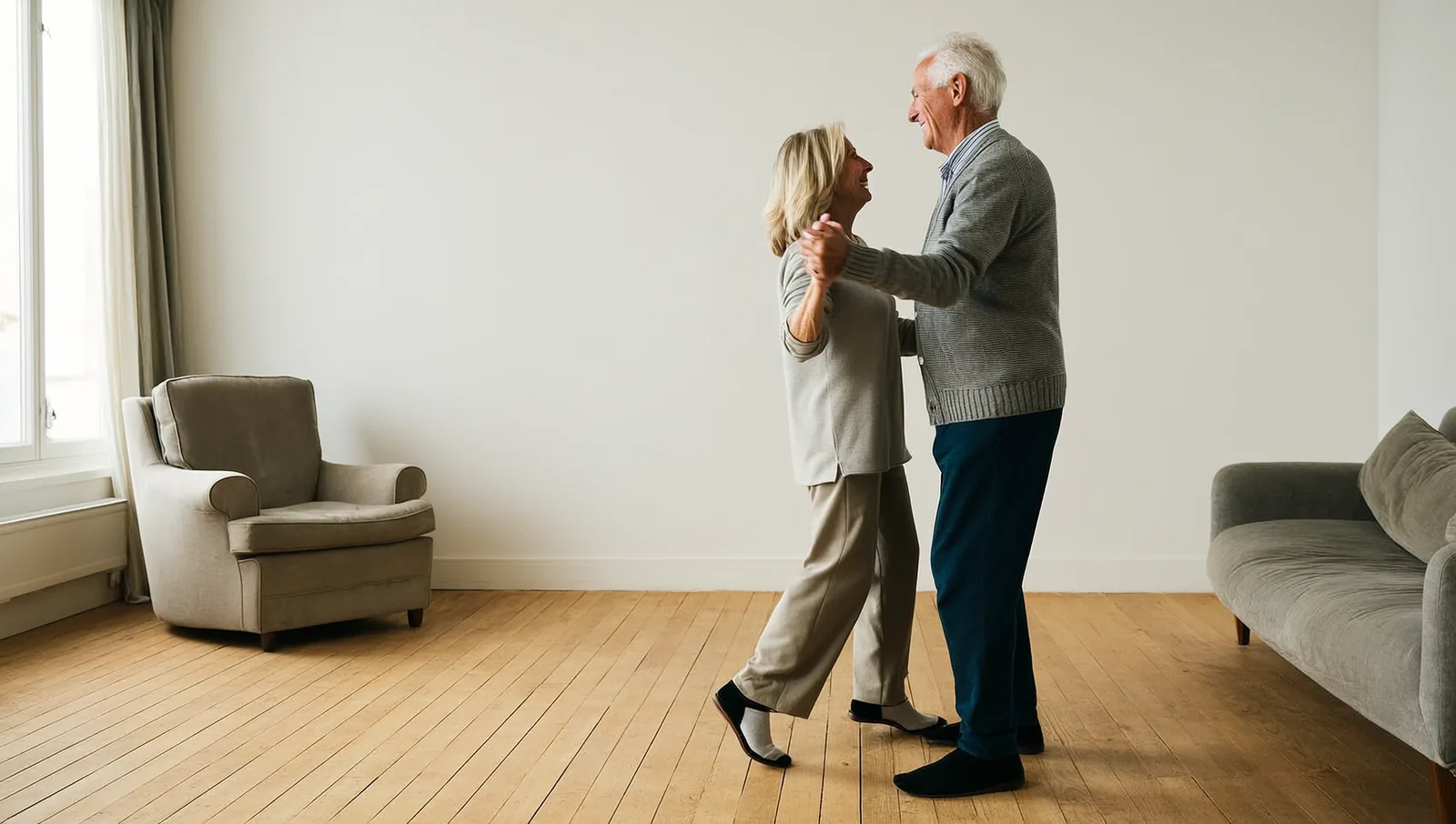
Keep it to 20 or 30 minutes at the time of day your loved one is at their best, and aim for a regular rhythm, twice a week or more, since the trial’s mood gains faded when the sessions stopped. Watch for frustration, and stop if there is dizziness, chest pain or unusual breathlessness. If standing is safe, a slow dance in the kitchen counts too.
The Bottom Line for Families
Dance movement therapy is a promising, low-risk option with one well-run trial behind it. In that trial it eased depression and loneliness, helped people keep up with daily tasks, and nudged a stress hormone toward a healthier rhythm, which is more than the matched exercise class managed. It did not sharpen memory, it did not calm behavioral symptoms, and it has not been tested in moderate or severe dementia.
So ask for it, and enjoy it if you find it, but do not pay a premium on the promise that it will slow the disease. Keep up the walks and other exercise, too; the habits in our brain health guide are worth keeping, adapted to what your loved one can safely do. And if low mood lingers for more than a couple of weeks, raise it with the doctor rather than waiting for a dance class to lift it. Only a geriatrician or neurologist can sort out what is driving a change in mood or ability.
Further reading (sources)
- Ho and colleagues on the 204-person trial comparing dance movement therapy with matched exercise
- Ho and colleagues for the published protocol and the case for a nonverbal approach
- Karkou and colleagues with the 2023 Cochrane review of dance movement therapy for dementia
- Zhao and colleagues on how dance compares with other exercise in MCI and dementia
- Forbes and colleagues for the Cochrane review of exercise programs for people with dementia
- Adam and colleagues on flatter daily cortisol slopes and poorer health
- Lawton and Brody with the original instrumental activities of daily living scale
- American Dance Therapy Association on how the profession defines dance/movement therapy
- American Dance Therapy Association for the training behind the R-DMT and BC-DMT credentials
- National Institute on Aging with ways to adapt exercise, music and dancing for someone with Alzheimer’s