Daily Personal Care for a Loved One With Dementia: The Complete ADL Caregiver Guide
Published on June 17, 2026

Much of dementia caregiving is not made of big decisions. It is made of mornings: a bath that turns into a standoff, a shirt buttoned the wrong way, a breakfast that goes cold because the food on the plate no longer looks like food. These everyday tasks, what clinicians call activities of daily living, become the real work of caring for someone as the disease moves into its middle and later stages. They are also where dignity is most easily lost, and most easily protected. This guide walks through the personal care that anchors each day, bathing, dressing, oral care, eating, and toileting, with the techniques that keep these moments calm and respectful for both of you.
How dementia changes an everyday task
To a healthy brain, brushing teeth is one smooth action. To a brain changed by dementia it is a chain of separate steps (find the brush, recognize the paste, remember what the brush is for, coordinate the hand) that can break at any link. The person is not being stubborn or lazy. They may not recognize the task, may feel frightened by water or a stranger’s hands, or may simply have lost the thread halfway through. Seen this way, most resistance is communication: a signal of fear, discomfort, embarrassment, or confusion rather than defiance.
Care needs climb as the disease advances. In the early stage, a gentle reminder or a little supervision is often enough. In the middle stage, when these tasks are hardest and resistance tends to peak, the person needs hands-on, step-by-step help. In the late stage, care becomes nearly total, and the focus shifts to comfort, safety, and watching for the pain or distress a person can no longer put into words.
The techniques that protect dignity
A handful of habits carry across every task below. Master these and the specifics get easier.
- Offer real but limited choice. Two options, not ten. “The blue sweater or the green one?” preserves a sense of control without overwhelming.
- Slow down. Rushing is the single fastest way to trigger anxiety and refusal. Build in far more time than the task seems to need.
- Break it into one step at a time. Say “Put your arm in the sleeve,” not “Get dressed.” One short instruction, then wait.
- Use hand-over-hand cueing. Place your hand gently over theirs to start a familiar motion (brushing, wiping, stirring) so muscle memory can take over.
- Model it. The “watch me” approach, where you mime brushing your own teeth, often works when words fail.
- Join their reality. If the person refuses, do not argue the facts. Step back, acknowledge the feeling, and try again in a few minutes. These are the same communication skills that defuse resistance and refusal across every part of the day.
Bathing without the battle
Bathing is often the hardest task of all, because it is intimate, exposing, and full of sensations that can frighten a confused mind. Depth perception changes can make a tub of water look like a dark hole, and cool air or stinging shampoo can make the whole thing feel like an assault. Expect some trial and error, and let go of a daily-bath rule. Two or three times a week is plenty, with a sponge bath or no-rinse products in between.
Set the stage before you say a word about bathing. Warm the room, lay out large towels to wrap the person for warmth and privacy, and put soap and shampoo within reach. Always check the water temperature yourself, even if the person ran it, and turn the water heater down to guard against scalds. Let the person do whatever they still can, hold the washcloth or wash their own arm, and narrate each step gently. A washcloth held over the eyes stops the sting that turns a wash into a fight.
Dressing and grooming
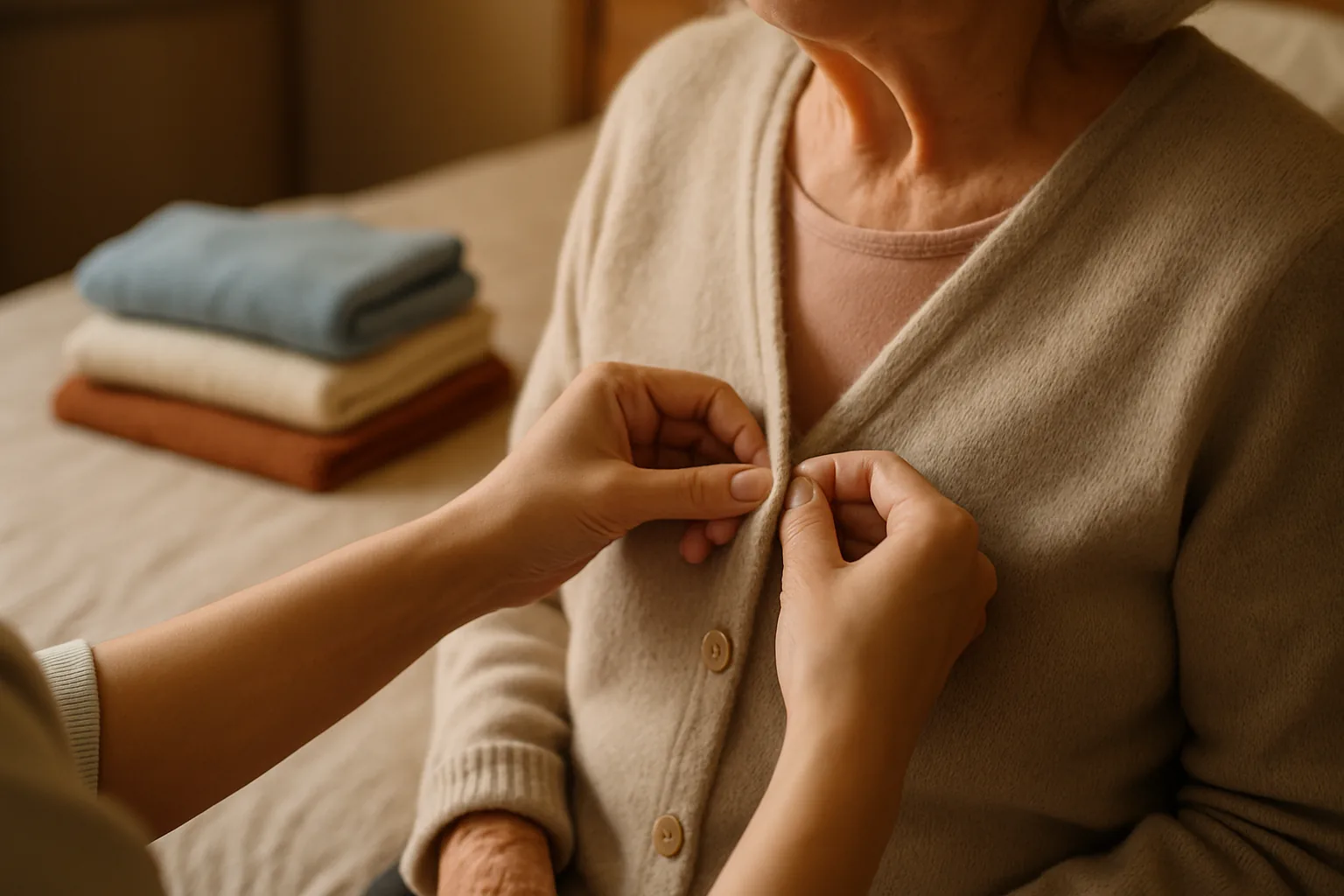
Getting dressed protects more than warmth; looking like themselves protects self-esteem. But a full closet can overwhelm, and the sequence of dressing is easy to lose. Pare the closet down and lay out clothing in the order it goes on, then hand over one item at a time with a simple cue. Choose clothes that cooperate: front-buttoning cardigans, soft stretchable fabrics, elastic waistbands, Velcro in place of fiddly zippers, and non-slip shoes. If a favorite outfit gets worn every day, buy duplicates rather than fighting about it. A mismatched outfit the person chose for themselves is still a win.
Grooming follows the same spirit. Keep familiar rituals alive, like the weekly trip to the barber or salon, and help with combing, shaving, and nails when needed. Clean undergarments are not just about comfort; poor hygiene invites urinary tract and skin infections that make everything harder.
Oral and dental care
Mouth care is easy to overlook and quietly important. Untreated dental problems cause pain the person may not be able to report, and they make eating harder. Brushing does not have to happen at the sink; do it wherever the person is calm. A child’s soft toothbrush is often easier to accept, and gum-and-teeth wipes help on days when brushing fails. Break it into small spoken steps (“Hold the brush, put it in your mouth, brush the top”) or use the tell-show-do method: explain, demonstrate, then guide their hand. Clean dentures daily, check the gums and mouth regularly for sores, and keep up dental visits for as long as the person can tolerate them.
Eating and staying hydrated
Mealtimes get complicated in the middle and later stages. The person may be overwhelmed by a crowded plate, forget they are hungry, or insist they already ate. Serve simple, balanced meals and keep the table calm and uncluttered, with one or two foods in view rather than a busy plate. Finger foods (sandwiches, cut fruit, cheese) let someone who can no longer manage utensils keep feeding themselves. Watch for hidden reasons behind a poor appetite: ill-fitting dentures, a new medication, or food the person no longer recognizes.
Dehydration is a common, dangerous, and easily missed problem. Offer small drinks throughout the day rather than one big glass, and lean on water-rich foods like soup, fruit, smoothies, and milkshakes. If weight starts to slip in the later stages, ask the doctor about calorie-dense additions and supplements; sometimes a little extra sugar is what tempts a fading appetite back to the table.

Toileting and incontinence
Bladder and bowel accidents usually arrive in the middle and late stages, and how you respond shapes how much dignity the person keeps. Before assuming the dementia is the whole story, rule out treatable causes: a urinary tract infection, constipation, medication side effects, or simple trouble reaching the toilet in time all cause incontinence, and many are fixable. Do not restrict fluids to cut down on accidents; dehydration only breeds infections and makes things worse.
Make the bathroom easy to find and use, with a clear, well-lit, clutter-free path, a visible or signed door, and clothing that comes off quickly. Offer regular, scheduled trips to the toilet rather than waiting to be asked. And keep your tone matter-of-fact and kind. “Anyone can have an accident” preserves dignity where scolding destroys it. Respect privacy as much as safety allows.
The daily routine that holds it together
All of this works better inside a predictable rhythm. A steady routine, the same general order of waking, washing, dressing, meals, activity, and rest, lowers anxiety because the person does not have to figure out what comes next. Build the day around when the person is at their best, often the morning, and schedule the hardest tasks then. Keep wake and sleep times regular to ease sundowning, and leave generous room for meals and personal care so nothing has to be rushed. Balance is the goal, not a packed schedule: alternate activity with rest, and stay flexible when a plan falls apart, because some days it will. Many families find that the same routines and memory aids that steady daily life make personal care smoother too.
Equipment and bathroom changes worth making
A few inexpensive changes remove a surprising amount of daily friction, and most of it centers on the bathroom, where the risks are highest. Worth buying:
- Grab bars beside the toilet and in the shower, plus a non-slip mat
- A shower or transfer bench and a handheld shower head, so bathing can happen seated
- A raised toilet seat, or a bedside commode for nighttime
- Lever-style faucet handles and a contrasting-colored toilet seat that is easy to see
- Night lights and clear signage marking the bathroom door
Beyond hardware, the wider environment matters. The same principles behind a room thoughtfully designed for memory care (good lighting, low clutter, and clear visual cues) make every personal-care task safer and calmer at home.
When to bring in a home health aide
There is no medal for doing this alone, and some tasks are genuinely a two-person job. Consider paid help when bathing or transfers become unsafe for one person, when your own back or sleep is giving out, or when the intimacy of toileting and bathing is straining your relationship with the person you love. A trained home health aide can take on the most charged tasks, and an occupational therapist can teach you safer techniques and recommend the right equipment. If you are weighing how much help to bring in, our guide to starting in-home memory care walks through hiring and cost.
Watch, too, for the point where daily needs outgrow what any home can safely provide: around-the-clock supervision, repeated falls, or care that leaves you depleted. That may be the moment to tour memory care options and the questions to ask, or, if a dedicated unit is out of reach, to learn what to demand from an assisted living community caring for someone with dementia. A geriatric care manager or social worker can help you read the signs and plan the next step.
None of this is really about clean teeth or matched socks. It is about meeting another person, on their hardest days, with patience instead of urgency and respect instead of efficiency. You will not get every morning right, and you do not have to. What the person feels, long after they have forgotten the bath itself, is whether they were treated with tenderness. That is the part that lasts.
Sources
- Alzheimer’s Association on making bathing safer and calmer
- Alzheimer’s Association for simplifying dressing and grooming
Further reading
- Communicating With a Loved One Who Has Dementia: A Complete Caregiver’s Guide
- Memory Management Techniques for Families Dealing with Dementia
- Designing a Comfortable Room for Memory Care: Key Considerations
- In-Home Memory Care: When to Consider It and How to Get Started
- Choosing the Right Memory Care Facility: Key Questions to Ask
- National Institute on Aging on bathing, dressing and grooming as dementia progresses
- National Institute on Aging for home safety tips that make daily care possible