Traveling With Dementia: A Family's Planning Guide for Safe, Calm Trips
Published on July 23, 2026
The Trip You Are Afraid to Book
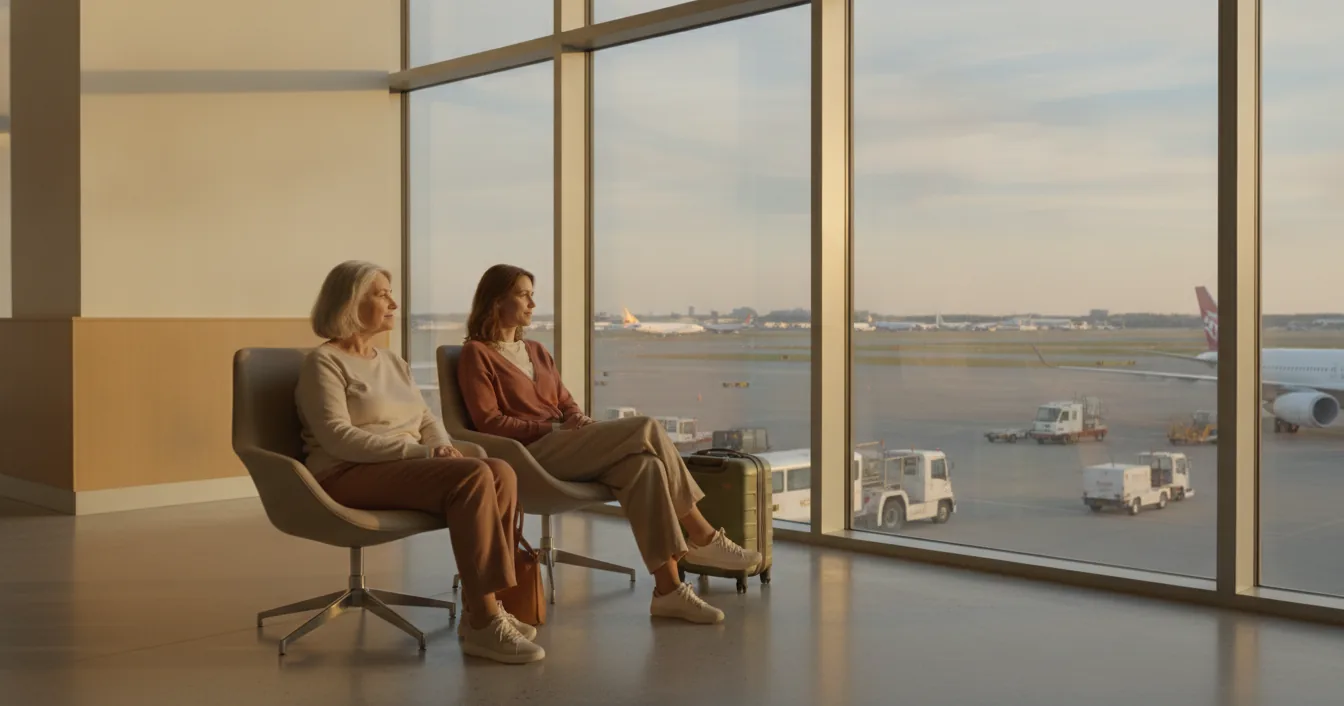
There is a wedding in August. Or a grandson’s graduation, or a brother in Ohio who is not going to be around forever, or a stretch of coastline your mother has loved since 1974. And you have been turning the same question over for weeks without saying it out loud: can we still do this?
Usually, yes. A dementia diagnosis does not end travel. What it ends is casual travel, the kind you book on a Thursday and figure out at the gate. Everything that quietly absorbs friction on a trip, improvising around a gate change, reading signs, tolerating a three hour delay, sleeping in an unfamiliar bed, runs on exactly the cognitive machinery the disease is dismantling. The trip is still available to you. It just has to be engineered now instead of improvised.
Here is how to build one that works.
Start With the Stage, Not the Calendar
The first question is not where to go. It is whether this person, at this point in the disease, can absorb the disruption travel requires.
In the early stage, travel is often genuinely doable, and worth doing. In the middle stage it is still possible, but the trip has to shrink: fewer stops, shorter distances, more help, no ambition. In the late stage, travel is usually not recommended, because a person at that point tires easily, is overwhelmed by ordinary daily activity, is more vulnerable to illness and infection, and may be struggling with sitting, eating, or swallowing. When you reach that stage, the kindest version of a family reunion is the one that travels to them.
Stage is not the only variable. The specific type of dementia involved shapes how much disruption a person can tolerate. Lewy body dementia brings fluctuating alertness and visual misperception, which unfamiliar rooms and busy terminals make worse. Frontotemporal dementia can leave physical stamina intact while judgment and impulse control fail in exactly the settings where you need them most.
So talk to the physician before you book anything, not after. Only a neurologist or geriatrician can say whether travel is safe for your loved one right now, and that conversation is worth having early enough that a “not this year” answer does not cost you a nonrefundable deposit.
Stick With the Familiar
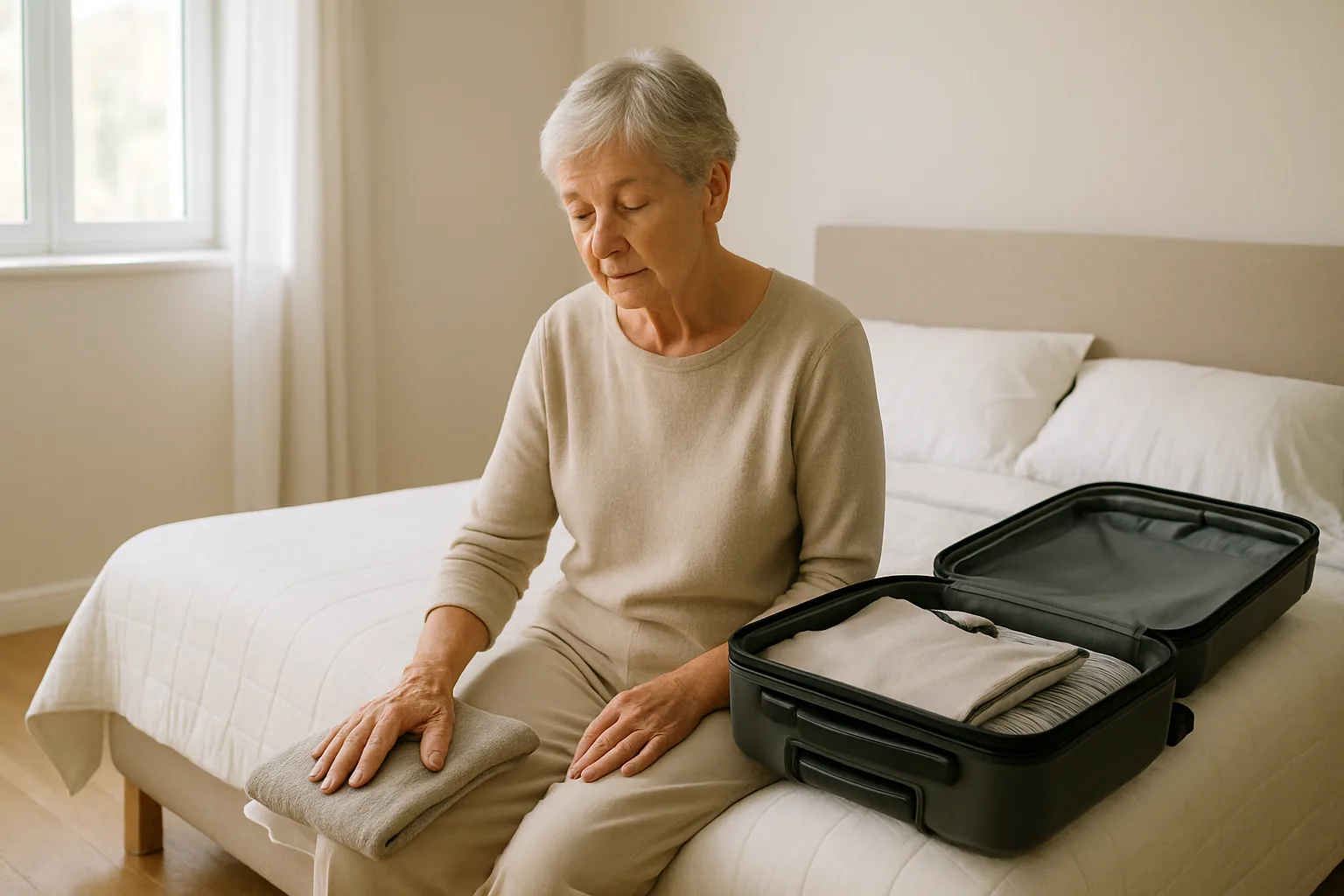
Environmental change is one of the reliable triggers for confusion and wandering, which means the destination itself is a safety decision.
Favor places your loved one knew well before the diagnosis, and trips that require the fewest changes to the daily routine. Choose somewhere with easy access to emergency health services and a pharmacy. Skip the elaborate sightseeing itinerary and the complicated multi-city tour; those cause anxiety in people who are already working hard to stay oriented. Travel during the hours when your loved one is at their best, and if late afternoon brings fatigue or agitation, do not be in a terminal at four o’clock.
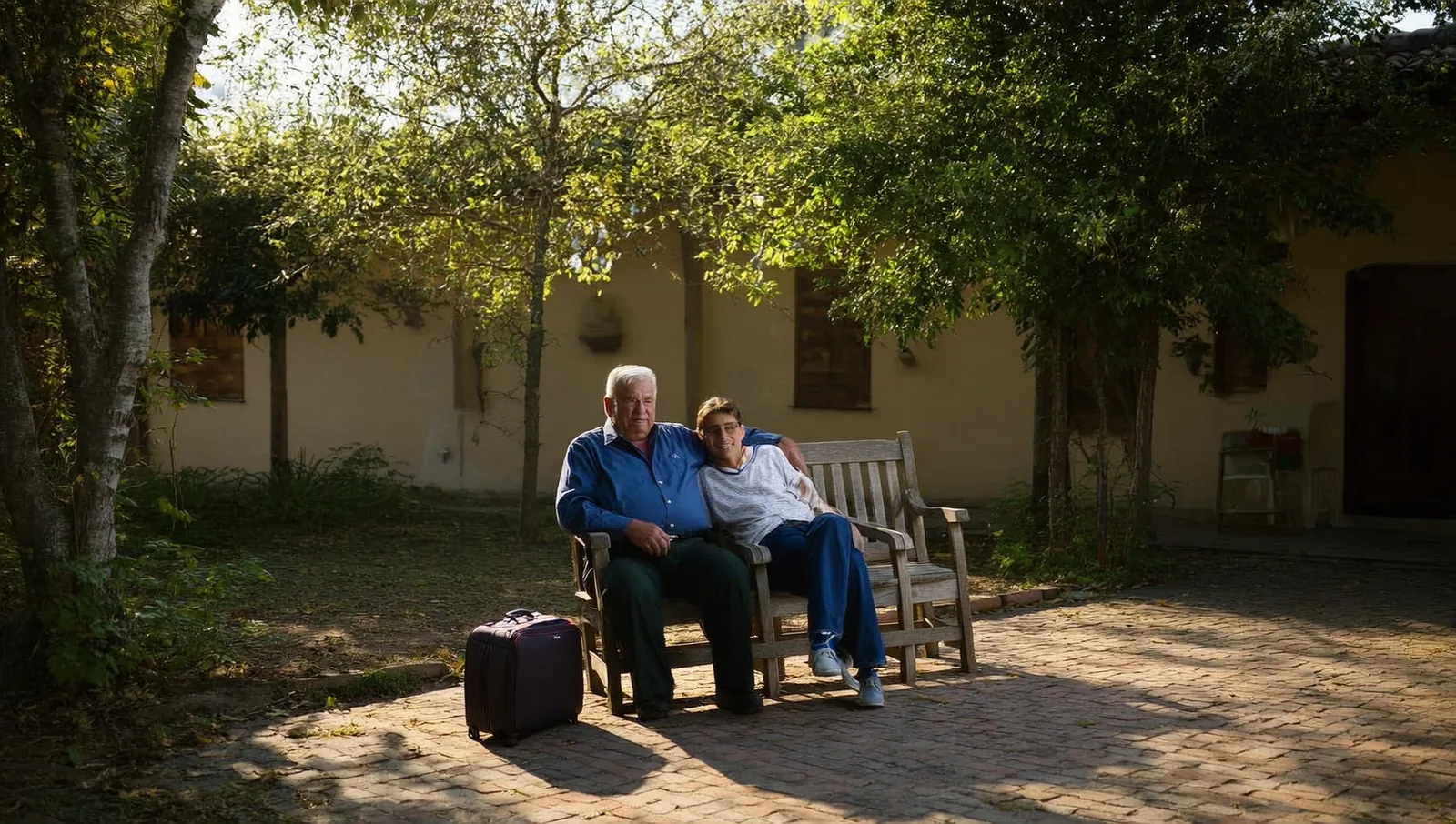
Then choose the mode of travel on its merits rather than its speed. For a mid-distance trip, your own car often beats flying: familiar seats, your own snacks, the freedom to stop when someone needs to stop, no security line, no strangers. The person with dementia is a passenger now, of course, and if that transition is still unsettled in your family, the driving conversation is worth resolving before the trip rather than in the driveway. Weigh the honest cost of the drive too, because nine hours in a car is nine hours of confinement. Trains offer room to walk, no security theater, and a bathroom you can reach without asking permission.
Getting Through the Airport
An airport is a sensory assault built for people with intact attention: crowds, announcements, shifting gate numbers, a security process that demands you follow verbal instructions from a stranger while your shoes come off. Plan it as its own project.
Book through the airline directly or through a travel agent, so you can attach notes to the reservation about wheelchair assistance, meals, and any special need. Avoid tight connections entirely. Review a map of any unfamiliar airport ahead of time, noting the walking distance between gates, where security re-entry might be required, and where the restrooms are.
Request wheelchair assistance even if your loved one walks fine. This is the most underused move in the whole guide. It assigns you an actual airport employee who moves you through the checkpoint and to the gate, which cuts both the walking and the improvising. Most airlines want at least 48 hours of notice.
Then call TSA Cares at 1-855-787-2227, or use the online request form, at least 72 hours before departure. TSA can assign a Passenger Support Specialist, an officer with specialized training in assisting travelers with disabilities and medical conditions, to meet you at the checkpoint. Print TSA’s Disability Notification Card and hand it to the officer when you arrive. It does not exempt anyone from screening. It just communicates the thing you would rather not announce out loud in a line of two hundred people.
At the checkpoint, tell the officer about the dementia diagnosis and ask what to expect. Ask airport staff and the in-flight crew for help without hesitating; this is what they are there for. Look for companion care restrooms, which let you assist without either of you being in the wrong room. And stay with your travel companion at all times. Not mostly. Always.
If your loved one is in the early stage and flying alone, plan the handoffs. Ask whether the airline offers a meet-and-greet escort service through security and between connections, list every emergency contact on the reservation, ask TSA about a gate pass so a family member can walk them all the way to the gate, and have them carry documents and identification in a wearable holder rather than loose in a pocket. Solo travel sits alongside the other systems that keep early-stage independence safe, and it deserves the same deliberate setup.
Pack the Bag That Never Leaves Your Hand
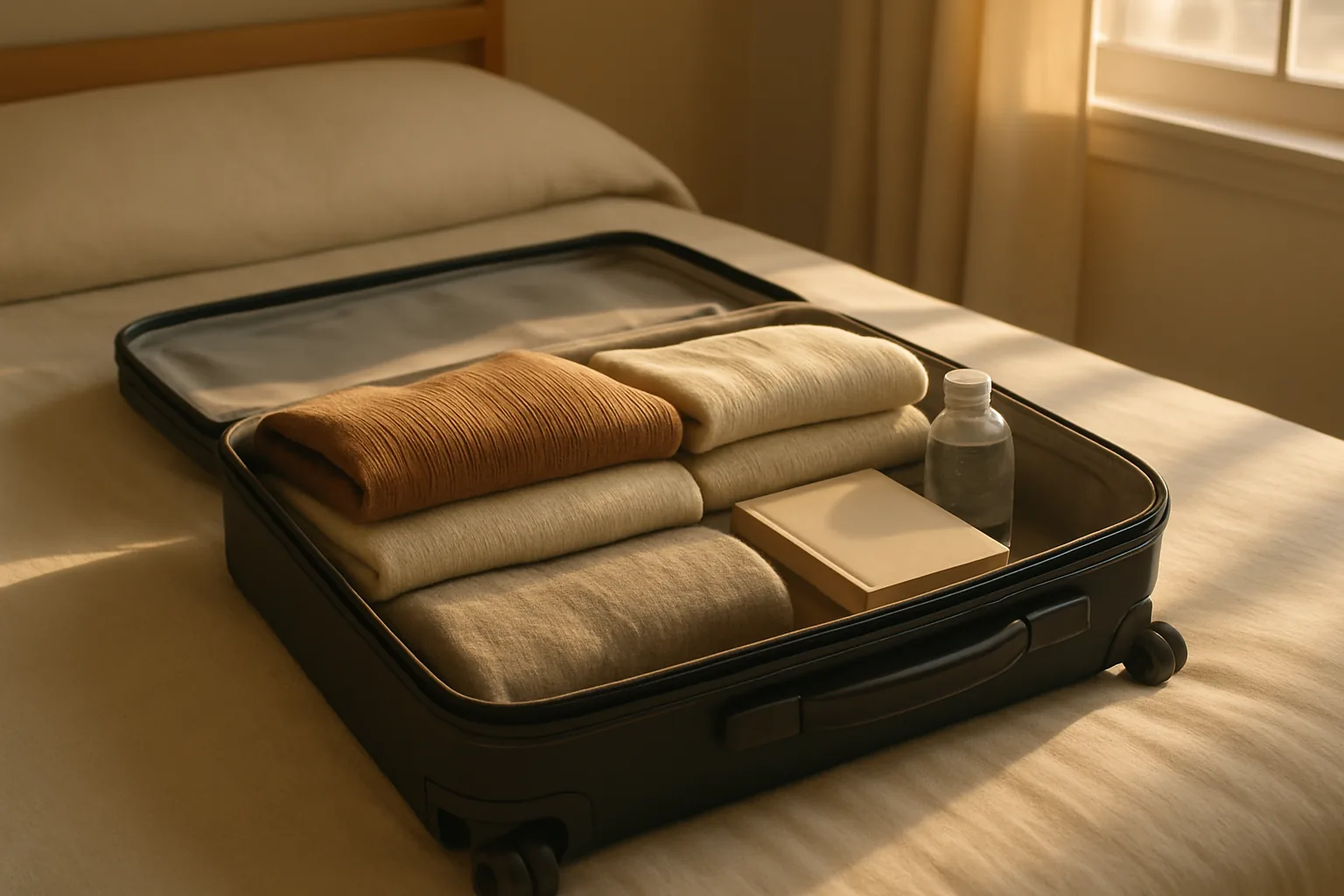
One bag stays with you: not checked, not in the overhead bin, not set down at a gate. In it go medications in their original labeled containers, the printed itinerary, a full change of comfortable clothes, water, snacks, and two or three familiar comfort items. Headphones with their own music, a worn photo album, a favorite cardigan. Those objects do more work on a delayed flight than anything you can buy at the terminal.
Carry a document folder as well, with:
- Doctors’ names and contact information
- A current medication list with dosages
- Phone numbers for the local police, fire department, hospital, and poison control at each destination
- A list of food and drug allergies
- Copies of legal papers: living will, advance directives, power of attorney
- Names and numbers of emergency contacts
- Insurance information, including policy number and member name
Keep a written itinerary with the details of each stop, and give copies to the people you are visiting and to someone at home. Buy travel insurance if you have booked flights or hotels, because the backup plan you never use costs far less than the trip you cannot cut short.
Identification Precautions Away From Home
Six in ten people living with dementia will become lost or disoriented at least once. A strange city strips away every familiar cue at the same moment, so treat identification as non-negotiable before you leave.
Put an ID bracelet on your loved one that lists their name and an emergency contact, or sew a clothing tag with their full name and yours. Take a clear photograph on the first morning of the trip and note what they are wearing each day, so a description exists if you ever need one in a hurry. Ask about local wandering response and safe return programs at your destination.
Carry the Alzheimer’s Association’s printable companion cards too. They explain in a line that this person has dementia and ask for patience, which lets you hand one to a gate agent, a server, or a clerk instead of explaining across a counter while your loved one stands there listening.
Tell the hotel staff ahead of arrival what you need. Most will accommodate a quieter room, a location away from a busy corridor, or a heads-up at the front desk, and none of them can help with something they do not know about.
Prepare the People, Not Just the Place
Visits to family are where good trips most often come apart, usually because nobody briefed the relatives.
Before you arrive, explain what dementia has changed, what to expect, and what helps. Say plainly that the visit may be short, that the plan may change with no notice, and that nobody should take it personally. Ask for one quiet room to retreat to. Ask people not to quiz your loved one about names or dates.
Once there, hold the routine rather than the itinerary. Keep meals and bedtime close to the home schedule. Eating in beats a crowded restaurant almost every time. Under-schedule ruthlessly, with one real activity a day and genuine rest around it, and be realistic about what is possible now rather than what was possible two years ago. Personal care in an unfamiliar bathroom is the hidden difficulty of every trip: the techniques that work at home travel with you, but the grab bars do not, so scout the bathroom on arrival.
Watch for agitation building instead of waiting for it to land. Know the early warning signs your loved one shows and agree on your responses before you leave the house. Most of what defuses a hard moment on the road is the same calm, unhurried communication that works in the kitchen: no arguing, no correcting, no piling on instructions. If you are staying somewhere for an extended period, the local Alzheimer’s Association chapter can point you to support and resources in that community.
Give Yourself Permission to Go Home Early
Decide in advance who makes the call to end the trip, and agree that whoever makes it will not be second-guessed later. A trip cut short on day two is a rough weekend. A trip pushed through past the point of distress becomes something your loved one carries in their body long after they have lost the details of it.
And if the honest answer this year is no, that is a real answer, not a failure. Bring the occasion to them instead: a scaled-down visit at home, a video call during the ceremony, a photo album afterward that gets looked at slowly over a week. The point was never the miles.
The Goal Is a Good Day, Not a Good Itinerary
Travel with dementia works when you stop measuring the trip by what you saw and start measuring it by how the person felt. Fewer stops, more rest, a familiar destination, one bag you never let go of, and a plan for the moment things go sideways. That is the whole method.
Talk to the physician first, then build the trip around the answer. A geriatric care manager or social worker can help you think through whether a particular journey is realistic and what support to arrange at the other end. And the Alzheimer’s Association 24/7 Helpline (800.272.3900) is staffed at every hour, including the ones spent in an airport with a phone in your hand, wondering whether you made the right call.
Sources
- Alzheimer’s Association on planning a calm trip and what to pack
- TSA for how to request a Passenger Support Specialist at the checkpoint
- TSA with the printable disability notification card
- Alzheimer’s Foundation of America covering travel precautions and identification tips
- Alzheimer’s Association detailing why people wander and how to lower the risk
Further reading
- Driving and Dementia: When and How to Take the Keys Away
- Living Alone With Early-Stage Dementia: A Complete Safety, Independence, and Support Guide
- Communicating With a Loved One Who Has Dementia: A Complete Caregiver’s Guide
- Daily Personal Care for a Loved One With Dementia: The Complete ADL Caregiver Guide
- Types of Dementia: A Family’s Complete Guide to Telling Them Apart