Communicating With a Loved One Who Has Dementia: A Complete Caregiver's Guide
Published on May 22, 2026
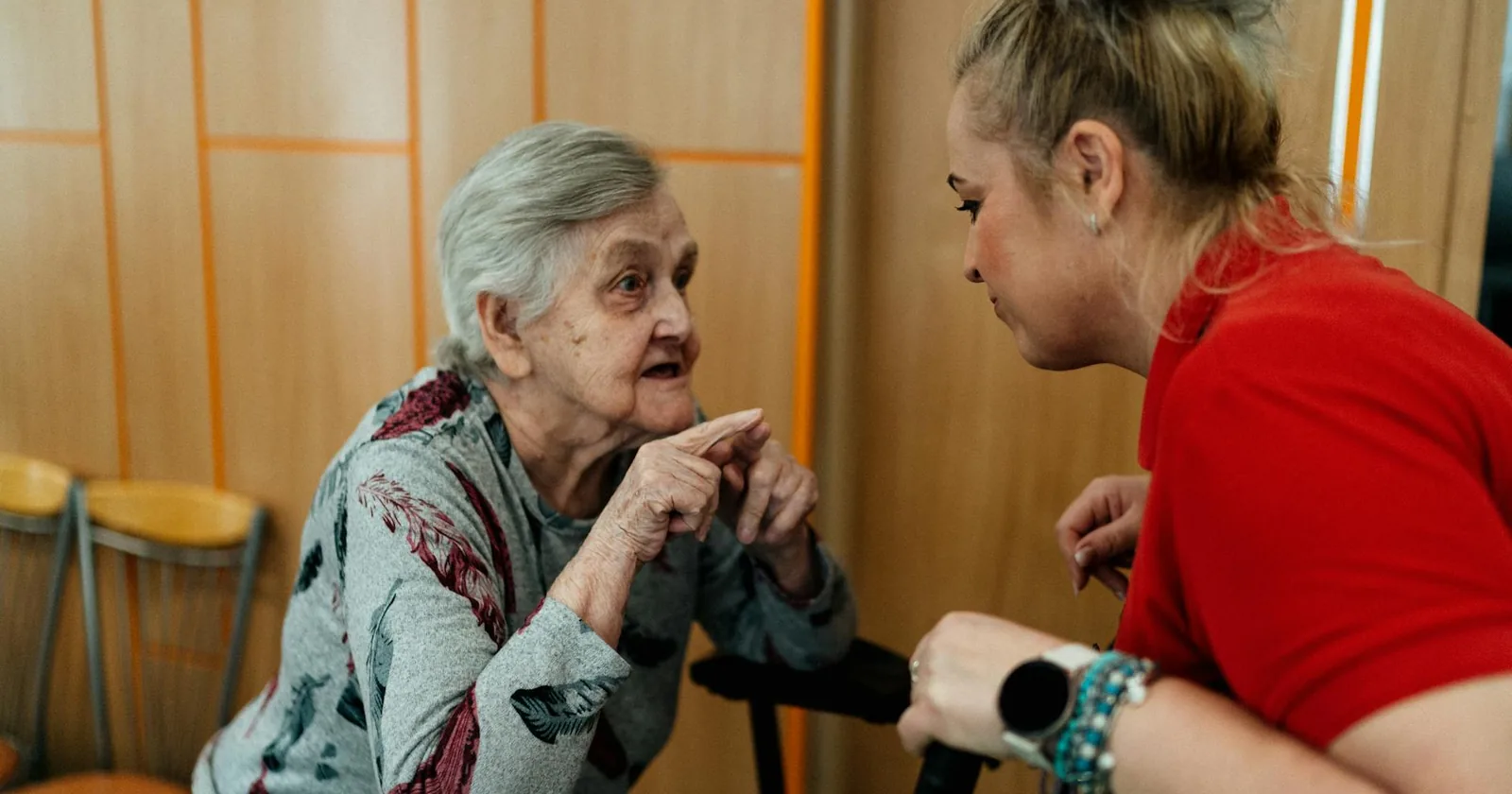
When the Words Stop Coming Easily
If you care for someone with Alzheimer’s disease or another dementia, you have probably already felt it. A conversation that once flowed now stalls. Your loved one reaches for a word and cannot find it, tells the same story twice in ten minutes, or grows upset over something you cannot name. Dementia gradually wears away a person’s ability to communicate, and that loss can feel as painful as any other part of the disease.
Here is the encouraging part. Communicating with a person who has dementia is a skill, and skills can be learned. With patience, a few reliable techniques, and a willingness to meet your loved one where they are, you can keep connecting deep into the illness. This guide covers how dementia changes communication at each stage, the validation approach at the heart of every good exchange, the nonverbal signals that matter more than your words, and how to handle the hardest conversations of all.
How Dementia Changes Communication
Dementia affects each person differently, but some patterns show up again and again. Your loved one may struggle to find words, describe an object instead of naming it (“the thing you write with”), lose the thread mid-sentence, repeat familiar phrases, lean on gestures more than speech, or slip back into a first language from childhood. Vision and hearing loss often pile on top, so have both checked regularly. A hearing aid or current eyeglasses can do more for communication than any technique.
The disease also moves through stages. In the early stage, your loved one can still hold a real conversation, so speak to them directly, include them, and resist finishing their sentences. The middle stage, usually the longest, takes more effort: move to a quiet room, speak slowly, ask one question at a time, and allow plenty of time for a reply. In the late stage, spoken words may nearly disappear, and your tone, your face, and your touch carry the message instead. Communication does not end. It changes form.
The Validation Approach: Join Their Reality
The most useful shift any caregiver can make is this: stop correcting, and start validating. A person with dementia is working hard to make sense of a world that no longer holds together. When your mother insists she must collect children who are now grown, or your father asks for a parent who died long ago, the facts are not the point. The feeling underneath is.
Validation means acknowledging that feeling rather than arguing with the fact. Arguing rarely works, and it cannot, because you are asking someone to use reasoning the disease has taken away. The usual result is that you both end up distressed. Joining their reality works better. If your loved one wants to “go home” while sitting in their own living room, they are probably expressing a wish for comfort and safety, not naming an address. Reassure them, ask them to tell you about home, and the agitation often settles on its own. Focus on feelings rather than facts and you will defuse far more moments than you set off.
What Your Body Says: Nonverbal Communication
As speech grows harder, your loved one reads you in other ways. By the later stages, body language and tone of voice carry most of the message, and people with dementia are remarkably sensitive to both. If you are tense, rushed, or frustrated, they will sense it and often hand it back as agitation.
A few habits make a genuine difference:
- Approach from the front and come into view before speaking, so you do not startle them.
- Get to eye level. Sit or crouch instead of standing over them. Eye contact shows you are present and listening.
- Slow down. Move and speak at an unhurried pace, and lower your voice rather than raising it. A calm, warm tone reassures even when the words do not land.
- Use gentle touch when it is welcome. A held hand, a touch on the arm, or a hug can carry safety and affection when language fails.
- Clear the distractions. Turn off the television and find a quiet spot before an important exchange. Competing noise makes processing much harder.
Your expression matters too. A relaxed, friendly face tells your loved one they are safe with you, and that message often lands long after specific words are gone.

Everyday Conversation: Practical Techniques
For ordinary daily exchanges, a handful of techniques keep things smooth. Keep sentences short and cover one idea at a time. Ask a single question rather than several, and favor yes-or-no questions over open-ended ones: “Would you like tea?” is easier to answer than “What would you like to drink?” When you offer a choice, offer two options, not five.
Give your loved one time. Silences can feel long, but jumping in to supply a word can be discouraging. If they are clearly stuck and want help, offer it gently. Avoid quizzing (“Do you remember who this is?”), which spotlights what has been lost. Instead, fold the information in warmly: “Here is your granddaughter Mae, come to visit.” Name people and places as a natural part of talking and you spare everyone the sting of a failed test. And it is still fine to laugh together; humor lightens the work for both of you.
When Emotions Run High: Anger, Suspicion, and Fear
Some of the hardest moments in dementia care are not about lost words at all. They are about behavior, and behavior is its own language.
Aggression and anger can flare suddenly and with no obvious cause. They are not deliberate. They usually signal an unmet need: pain, hunger, exhaustion, a too-loud room, or a task that feels overwhelming. Stay calm, keep your voice soft and slow, and do not argue. Look for the trigger, rule out pain, simplify or pause the activity, and shift to something soothing such as music or a short walk. If it is safe to do so, give both of you a brief break. If anyone is at risk, get help, and tell responders the person has dementia.
Suspicion and false accusations are also common, and they sting. Your loved one may accuse you of stealing a missing wallet or of worse. Try not to take offense, because the disease is speaking, not the person who loves you. Do not argue or defend yourself. Listen, reassure, give a short and simple answer, then redirect to another activity. Keeping a duplicate of often-misplaced items, a spare wallet for instance, can quietly end the search.
Hallucinations can frighten the whole family. If your loved one sees or hears something that is not there but is not upset or in danger, you may not need to step in at all. When it does distress them, respond calmly, reassure them (“I am here, you are safe”), and do not argue about what is real. Because new hallucinations and severe delusions can have medical causes, they deserve a doctor’s evaluation.
When the Light Dims: Depression, Withdrawal, and Sundowning
Other changes are quieter and easier to miss.
Depression is very common in dementia. Experts estimate that up to 40 percent of people living with Alzheimer’s experience significant depression, most often in the early and middle stages. It can look like loss of interest, withdrawal, or trouble concentrating, which makes it hard to tell apart from dementia itself, and it may surface as physical complaints or come and go. If you notice the signs, raise them with your loved one’s doctor. Depression is treatable, and treating it can lift quality of life considerably.
Withdrawal is its own kind of message. A loved one who has gone quiet may be depressed, may be overwhelmed, or may simply find conversation too effortful. Keep including them without pressure. Sit together, share music, look through old photographs. Connection does not require words.
Sundowning is the increased confusion, anxiety, and agitation many people with dementia feel as daylight fades. Late afternoon and evening are not the time for demanding conversations or big decisions. Keep the evening calm, keep the home well lit so deepening shadows do not add to the confusion, lower noise and stimulation, and save appointments and hard topics for the morning, when your loved one is most alert.
One principle ties all of these together: a sudden change in behavior deserves a medical checkup, because pain, infection, and medication side effects are common and treatable causes. Lean on non-drug approaches first. Antipsychotic medications carry serious risks for older adults with dementia and should be a carefully weighed last resort, never a first response.
A Word for the Caregiver
Communicating well with a loved one who has dementia asks a great deal of you, and you will not get it right every time. No one does. When an exchange goes badly, let it go, and hold on to this: the person you care for is not choosing to be difficult. The disease is speaking, not them.
You are also not meant to do this alone. Daily routines and engagement strategies make communication easier across the board. If you bring in a trained in-home caregiver, or move toward a memory care community with dementia-trained staff, expect them to communicate the way you do: calmly, patiently, and with respect. A geriatric care manager or social worker can help you build that wider circle of support and make decisions you should not have to face by yourself.
Connection is still possible at every stage of this disease. It simply asks you to listen with more than your ears, and to speak with more than your words.
Sources
- Alzheimer’s Association on how communication shifts across the stages of dementia
- Alzheimer’s Association for calming anxiety and agitation
Further reading
- Memory Management Techniques for Families Dealing with Dementia
- In-Home Memory Care: When to Consider It and How to Get Started
- Designing a Comfortable Room for Memory Care: Key Considerations
- Choosing the Right Memory Care Facility: Key Questions to Ask
- National Institute on Aging on Alzheimer’s caregiving fundamentals
- National Institute on Aging for communicating with someone who has cognitive impairment